Lead Generation in Kenya: Strategy, Channels, and Costs
A practical guide to generating qualified B2B and B2C leads in Kenya, covering channel selection, KES budgets, and operational follow-up.
What Is Lead Generation in Kenya?
Lead generation in Kenya is the process of identifying, attracting, and converting prospects into qualified sales inquiries for your business. It combines local search visibility, targeted campaigns, and prompt operational follow-up to move buyers from initial interest to a confirmed sale.
Many Kenyan companies struggle with lead generation because they confuse traffic generation with actual pipeline growth. Getting thousands of website hits or social media views means little if those visitors never leave their contact details or lack the budget to buy from you.
For a focused look into enterprise sales cycles, read our separate guide on B2B lead generation in Kenya.
If your organization needs a structured strategy to attract high-intent buyers and build predictable revenue, explore our specialized lead generation services.
Lead generation in Kenya refers to building reliable systems that capture verified contact details and purchase intent from potential buyers. In the East African market, a genuine lead is rarely just an anonymous email address. It is usually a direct phone number, a verified WhatsApp contact, or a structured form submission containing a clear business request.
Kenyan buyers behave differently depending on whether you sell to businesses or directly to consumers. B2B transactions in commercial centers like Mombasa and Kisumu involve longer approval cycles, detailed proposals, and committee reviews. B2C transactions move faster, relying on immediate responses, trust signals, and clear payment options such as M-Pesa.
A successful lead generation framework must map directly to these local purchasing habits. Capturing fifty low-quality contacts from social media does not help your sales team if those people cannot afford your services or refuse to answer phone calls. Modern lead generation focuses on attracting prospects who possess both the financial authority and immediate intent to make a transaction.
How Much Does Lead Generation Cost in Kenya?
Lead generation costs in Kenya vary based on your sector, chosen marketing channels, audience targeting, and whether you handle campaign execution internally or partner with a consultancy. Most small and medium enterprises spend varying amounts per month on advertising spend and management services combined.
To understand how advertising spend fits into broader commercial budgets, read our guide on how much digital marketing costs in Kenya.
Cost Per Lead Breakdown by Industry
Your cost per lead depends heavily on market competition and customer lifetime value. High-value professional services cost more per inquiry than mass-market consumer items.
- Professional Services and B2B Consultancies: CPL generally ranges from KES 1,500 to KES 6,000 per qualified lead on search and professional networking platforms.
- Real Estate and Property Development: CPL typically sits within a variable range for qualified buyer or tenant inquiries.
- Financial and Insurance Services: CPL varies depending on policy complexity and target income groups.
- Consumer Goods and Direct Services: CPL can range from KES 150 to KES 600 using direct social messaging and mobile ad campaigns.
In-House Team Versus Consultancy Retainers
Hiring a full-time internal marketing specialist in Nairobi costs between KES 60,000 and KES 150,000 per month in salary alone, excluding campaign software and direct ad spend. Working with an experienced consultancy ranges across various monthly budgets for setup, optimisation, conversion tracking, and reporting.
Which Channels Work Best for Generating Leads in Kenya?
The most effective channels for lead generation in Kenya are Google Search, WhatsApp Business, LinkedIn, and Meta platforms including Facebook and Instagram. Selecting the correct combination depends on where your target audience searches for information and how quickly they expect answers.
If your campaign architecture requires specialized search and social execution, look into our ads management services.
Google Search Ads and Local SEO
High-intent buyers in Kenya turn to Google Search when they have an immediate business need. Searching for phrases like tax consultants in Kenya or commercial generator supplier Kenya indicates an active intent to buy. Search campaigns capture users at the exact moment they look for solutions.
WhatsApp Business Integration
WhatsApp is the central communication channel for commerce across Kenya. Adding direct WhatsApp click-to-chat features or quick inquiry buttons to your website reduces friction significantly. Local prospects frequently prefer asking questions via instant message over filling out long web forms.
LinkedIn Campaigns for B2B
For companies selling to corporate executives, procurement leaders, or department managers in East Africa, LinkedIn offers direct demographic and job title targeting. Combining targeted outreach with regular industry insights allows sales teams to reach buyers in corporate hubs like Upper Hill, Westlands, and Kilimani.
Meta Lead Ads for Facebook and Instagram
Meta platforms remain highly effective for consumer services, real estate listings, short courses, and retail products. Embedded lead forms keep users inside the mobile app, reducing landing page bounce rates and lowering initial acquisition costs.
How to Build a Lead Generation Process Step by Step
Building a successful lead generation process requires moving systematically from market definition to infrastructure setup and ongoing campaign refinement. Launching ads without structured back-end operational systems usually results in lost inquiries and wasted ad spend.
If you want to evaluate your existing acquisition setup before investing in new campaigns, use our free marketing audit.
Step 1: Define Your Ideal Customer Profile
Start by documenting the specific characteristics of your best buyers. In Kenya, this includes target locations such as Nakuru, Eldoret or Mombasa, business sizes, monthly budgets, and urgent operational challenges. Defining this profile clearly stops you from spending money on audiences who will never purchase.
Step 2: Build High-Converting Lead Capture Mechanisms
Your landing pages and contact forms must make submission as simple as possible on mobile devices. Request only essential information including full name, phone number, company name, and a short note about their request. Ensure your pages load quickly, as most mobile users in Kenya browse on cell data connections.
Step 3: Configure Instant Alert Systems
Set up automated notifications so your sales team gets alerted instantly when a prospective customer submits their details. Speed is essential in the local market. An inquiry contacted within five minutes is far more likely to turn into a sales conversation than one contacted six hours later.
Step 4: Test Messaging and Optimise Budgets
Run multiple variations of your ad copy, headlines, and call-to-action buttons simultaneously. Review performance weekly to identify which ads generate verified sales leads rather than low-quality clicks, shifting your marketing spend toward the top-performing assets.
Why Most Lead Generation Campaigns Fail in Kenya
Lead generation campaigns in Kenya fail most often due to slow response times, missing trust signals, and poor operational alignment between sales and marketing teams. Generating online inquiries without fast sales follow-up leads to wasted ad spend.
To fix the structural disconnect between capturing leads and closing sales, read our analysis of the marketing and operations gap.
Slow Follow-Up Speed
Kenyan buyers move on quickly if they do not receive an immediate response. If a buyer submits an inquiry at 9:00 AM and your team calls back at 4:00 PM, that prospect may have already spoken to two competitors who responded via WhatsApp within ten minutes.
Lack of Local Trust Factors
Local buyers look for verification before sharing details or paying deposits. Websites and landing pages that omit physical location details in Kenya, local landline or mobile contact numbers, standard pricing indicators, or corporate registration markers create unnecessary doubt.
Poor Sales and Marketing Alignment
Marketing teams often measure performance by total form submissions, while sales teams measure success by closed deals. If marketing delivers contact details for people who do not match the target profile, sales reps lose faith and stop following up quickly.
How to Qualify and Hand Off Leads to Sales
Qualifying leads involves filtering incoming inquiries based on budget, buying authority, specific need, and timing before passing them to account representatives. Structured qualification prevents sales teams from burning hours on prospects who cannot buy.
For operational templates on setting up internal workflows, read our practical guide on writing SOPs for small businesses in Kenya.
Define Clear Qualification Criteria
Establish strict requirements that an incoming lead must meet before entering your active sales pipeline. Common criteria include minimum budget levels, immediate purchase timeline, and geographic scope within Kenya or the wider East African region.
Use Automated Screening Prompts
Use initial intake forms or automated WhatsApp prompts to collect basic screening information. Asking preliminary questions such as your project timeline or your monthly budget range screens out non-serious inquiries automatically.
Document Sales Handoff Protocols
Define who receives new leads, the maximum allowed response time, and how reps log conversations in your CRM platform. Written operating procedures make accountability clear and ensure every legitimate lead gets systematic follow-up.
How to Measure Lead Generation Performance
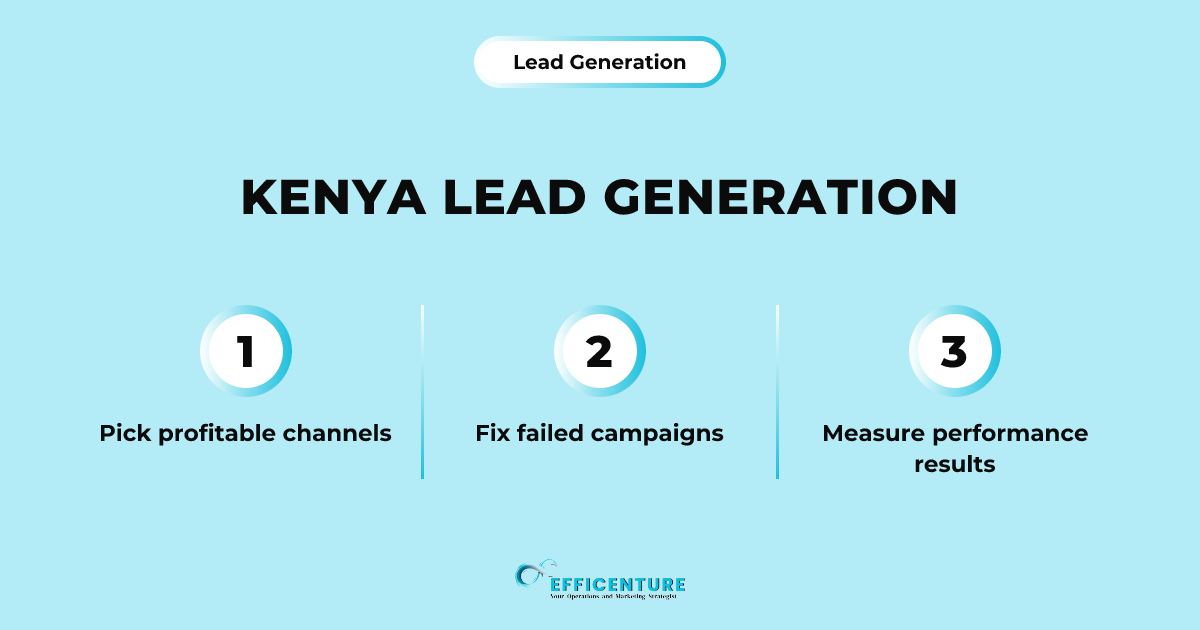
Measuring lead generation performance requires tracking metrics along the entire conversion funnel, from ad view to final customer acquisition cost. Looking only at vanity metrics like link clicks or ad impressions leads to poor business decisions.
If your team needs clear measurement frameworks and custom dashboards built for executive reporting, explore our analytics and reporting services.
Core Metrics Every Business Should Track
- Cost Per Lead: Total campaign spend divided by the total number of inquiries received.
- Cost Per Qualified Lead: Total campaign spend divided by the number of inquiries that pass your initial screening criteria.
- Lead-to-Opportunity Rate: The percentage of qualified inquiries that progress to a formal quotation or proposal stage.
- Customer Acquisition Cost: Total sales and marketing expense divided by the number of paying clients acquired during a specific period.
Configuring Attribution Tracking
Connect all marketing channels to Google Analytics 4 and your CRM system. Using UTM tracking parameters on campaign links allows you to trace closed revenue directly back to the specific keywords, platform ads, or content pieces that brought the prospect to your business.
Work with Efficenture for Your Lead Generation in Kenya
Building a predictable lead generation engine requires combining targeted acquisition channels, optimized capture tools, and tight operational follow-up. Efficenture is an operations and digital marketing consultancy based in Nairobi, helping businesses across Kenya and East Africa build reliable growth systems.
To design and run a campaign built for your business, learn more about our lead generation services or speak directly with our team on +254 714 146 122 today.
Frequently asked questions
What is lead generation in Kenya?
Lead generation in Kenya is the process of identifying, attracting, and capturing contact details from potential buyers interested in your products or services. It uses search engines, social media, and digital channels combined with immediate phone or WhatsApp follow-up to convert traffic into qualified sales inquiries.
How much does lead generation cost per month in Kenya?
Most small and medium businesses in Kenya spend between KES 50,000 and KES 350,000 per month on combined media spend and agency retainer fees. The total cost depends on your industry, channel selection, target audience, and competition levels.
Is WhatsApp effective for lead generation in Kenya?
Yes, WhatsApp is one of the most effective lead generation and qualification channels in Kenya due to high local usage rates. Adding WhatsApp click-to-chat options to landing pages reduces response friction and lets businesses initiate quick sales conversations with prospective buyers.
How quickly should a business follow up on a new lead in Kenya?
Businesses should ideally respond to new online leads within five to fifteen minutes. Rapid response significantly improves conversion rates because Kenyan buyers frequently contact multiple suppliers and prioritize vendors who reply first.
What is the difference between B2B and B2C lead generation in Kenya?
B2B lead generation targets corporate decision-makers through channels like LinkedIn and Google Search, focusing on longer sales cycles, formal proposals, and higher ticket values. B2C lead generation targets individual consumers using social media ads and direct messaging, focusing on quick buying decisions and mobile payment methods like M-Pesa.
Weekly Insights
One useful idea a week, on what you care about
A two-minute weekly briefing for growing businesses: the insight worth knowing on each topic you pick, why it matters, one thing to do that week, and the guides that go deeper. Unsubscribe any time.