B2B Lead Generation in Kenya: A Practical Guide
B2B buyers in Kenya research quietly, ask peers and expect a fast, knowledgeable reply. Here is how to build a lead system that fits how they buy.
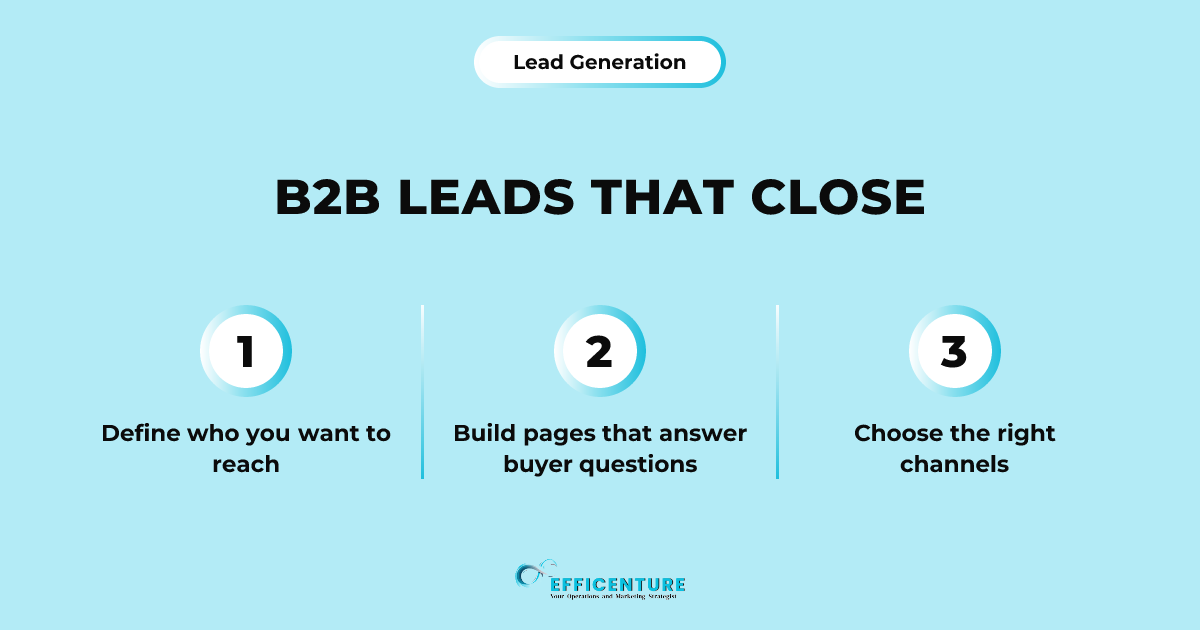
B2B lead generation in Kenya works best when you combine a clearly defined buyer, content and search that answer that buyer's questions, targeted outreach, a strong referral network and fast, knowledgeable follow-up. Buyers here often research online, check with peers and want to meet or call before they commit. A lead system that ignores any of those steps tends to produce either too few enquiries or the wrong ones.
The goal isn't the largest number of leads. It is a steady flow of enquiries from the kind of companies you can serve well, at a cost per new client that makes sense for your margins.
This guide covers how to set that up, whether you sell software, logistics, professional services, equipment or consulting.
Why is B2B lead generation different?
Selling to businesses differs from selling to consumers in ways that shape every channel choice.
- Several people decide. A purchase may involve the owner, the finance lead, an operations manager and sometimes a board. Each has different questions.
- Sales cycles are longer. A decision can take weeks or months, especially for larger contracts or anything that needs a budget approval.
- Trust carries more weight. Buyers want proof that you have done similar work, that you'll still be around next year and that you understand their sector.
- Relationships matter. In Kenya's business community, a recommendation from a trusted contact often counts for more than any advert.
- Deal values are higher. One good client can justify a cost per lead that would be absurd in consumer marketing.
Step 1: Define who you want to reach
Most weak B2B lead generation starts with a vague target, such as "SMEs in Kenya". Be specific.
Describe your best-fit client
Look at your best current clients and note what they have in common:
- Industry or sector
- Company size, by staff numbers or revenue
- Location, such as Mombasa, Kisumu or regional
- The problem that led them to you
- Who first contacted you, and who signed off
Map the decision-makers
List the roles involved in a typical purchase and what each one cares about. A finance director cares about cost and risk. An operations manager wants something that works without disruption. The owner wants growth or relief from a headache.
Write down the buyer's questions
Collect the questions prospects ask before buying: what it costs, how long it takes, what's involved, what could go wrong, how you compare with alternatives. These become your content plan and your sales conversations.
Step 2: Build pages that answer buyer questions
Before spending on any channel, make sure your website can turn interest into an enquiry.
- One page per service, explaining what it is, who it's for, what's involved and roughly what it costs, or how pricing works.
- Proof: case studies with permission, sector experience, certifications and team profiles.
- Clear contact routes: a short form, a phone number, WhatsApp and an option to book a call.
- Fast loading on mobile, since many decision-makers browse on their phones between meetings.
Articles that answer specific buyer questions do double duty. They help prospects decide, and they're the kind of content Google and AI tools such as ChatGPT draw on when answering similar questions.
Step 3: Choose the right channels
No single channel suits every B2B business. Most do well with a mix of three or four.
Search engine optimisation
People with an active need search for it: "payroll outsourcing Nairobi", "cold room installation Kenya", "ERP implementation partner Kenya". Ranking for these searches brings enquiries from buyers who already know what they need. SEO takes months to build but keeps working.
Google Search Ads
Search ads put you in front of the same high-intent searches straight away. For B2B, keep targeting tight, use negative keywords to exclude jobseekers and students, and send each ad to a matching service page. Judge results on cost per qualified lead, not cost per click.
LinkedIn is where many Kenyan professionals and decision-makers keep their work profiles. Use it in three ways:
- Company and personal profiles: keep them complete and current, since prospects check them before meetings.
- Content: share useful insights from your work, regularly and in your own words. Posts from founders and senior staff often reach further than company page posts.
- Direct outreach: connect with people in your target roles and start with something relevant to them, not a sales pitch.
LinkedIn ads can target by job title, company size and industry, but they usually cost more per click than other platforms. Test with a small budget and a specific offer, such as a guide or an assessment.
Referrals and partnerships
Ask satisfied clients who else might benefit from your work. Build relationships with businesses that serve the same clients without competing, such as accountants, lawyers, IT providers and consultants. Agree on how you'll refer clients to each other.
Events and associations
Industry associations, chambers of commerce and sector events remain valuable in Kenya. Speaking at an event or hosting a small breakfast session often produces better leads than a stand at a large expo.
Email works well for staying in touch with people who already know you: past enquiries, event contacts and existing clients. Only send marketing emails to people who have agreed to receive them. Kenya's Data Protection Act, 2019 restricts using personal data for commercial purposes without consent or another lawful basis.
Step 4: Qualify leads before they reach sales
Not every enquiry is a good one. Agree on simple criteria for what counts as a qualified lead, such as:
- The company fits your target profile.
- The person has a real need you can meet.
- There is a budget or a realistic path to one.
- There is a timeframe, even a rough one.
A short form with one or two qualifying questions, such as company size or what they need help with, filters out poor fits without putting off good ones. Don't ask for too much up front. Long forms reduce enquiries.
Step 5: Follow up fast and well
Speed and quality of follow-up often matter more than the channel the lead came from. A B2B buyer who sends three enquiries usually meets the firm that responds first and best.
- Reply quickly, ideally within the same working day.
- Make the first reply useful. Answer their question, suggest a next step and offer a call or meeting.
- Use the channel they chose. If they messaged on WhatsApp, reply there before moving to email.
- Follow up more than once. Busy decision-makers often need two or three polite reminders.
- Keep notes, so whoever speaks to the prospect next knows the history.
Step 6: Nurture leads that aren't ready yet
Many good prospects aren't ready to buy when they first enquire. Rather than losing them, stay in touch:
- Send a useful article or update every month or so, if they've agreed.
- Invite them to events or webinars.
- Check in when something relevant changes, such as new regulations, a new service or a case study in their sector.
A simple CRM, even a well-kept spreadsheet, helps you track who's in the pipeline and when to follow up.
How do you measure B2B lead generation?
Track the full path from first contact to signed client.
- Leads by source: how many enquiries each channel produced.
- Qualified lead rate: what share of those fit your criteria.
- Lead-to-client rate: what share became paying clients.
- Cost per client: total channel cost divided by new clients from it.
- Sales cycle length: how long it takes from enquiry to signed contract.
Set up Google Analytics 4 to track form submissions, calls and WhatsApp clicks by source. Then keep a lead log or CRM that records what happened to each lead. Review both together every month.
Because B2B sales cycles are long, give channels enough time before judging them. Two or three months of data is often the minimum before you can see which channels produce clients, not just enquiries.
Common mistakes in B2B lead generation
- Targeting everyone. Generic messaging attracts generic enquiries.
- Buying contact lists. Bought lists are often outdated, and contacting people without a lawful basis can breach the Data Protection Act.
- Measuring leads instead of clients. A cheap lead that never converts is expensive.
- Slow follow-up. Good leads go cold within days.
- Giving up on a channel too early. B2B results take time, especially SEO and referrals.
- No content to support sales. Prospects want to read about your approach before they meet you.
How Efficenture can help
Efficenture builds lead generation systems for B2B companies in Kenya, from defining the target client and building service pages to running search and LinkedIn campaigns and setting up tracking that shows cost per client. Learn more about our lead generation service, or see how search engine optimisation and ads management fit in.
We're based in Nairobi and work with businesses across Kenya and East Africa. Book a consultation and we'll look at where your best clients come from today and how to find more like them.
Frequently asked questions
What is the best lead generation channel for B2B companies in Kenya?
There is no single best channel. Most B2B firms do well with a mix of search (SEO and Google Ads), LinkedIn, referrals and industry events. The right mix depends on how your buyers search for and choose suppliers.
How much does B2B lead generation cost?
It depends on your sector, competition and channels. Work out what a new client is worth to you, then track cost per client rather than cost per lead. A higher cost per lead can still be worthwhile if those leads close often and are worth a lot.
Is it legal to buy email lists in Kenya?
Using personal data for marketing without consent or another lawful basis can breach the Data Protection Act, 2019. Bought lists also tend to be outdated. Build your own list from people who have agreed to hear from you.
How long does B2B lead generation take to show results?
Search ads and outreach can produce enquiries within weeks. SEO and referral networks usually take several months. Because sales cycles are long, give each channel two or three months before judging it on clients won.
Should B2B companies use WhatsApp for leads?
Yes, many Kenyan buyers prefer it for quick questions. Add a WhatsApp option to your website, track clicks in Google Analytics 4, and reply promptly, then move to a call or meeting for larger deals.
Weekly Insights
One useful idea a week, on what you care about
A two-minute weekly briefing for growing businesses: the insight worth knowing on each topic you pick, why it matters, one thing to do that week, and the guides that go deeper. Unsubscribe any time.