How to Start Lead Generation for a Small Business
You don't need a big budget to start generating leads. You need a clear customer, a reason to get in touch, one channel done well and fast follow-up.
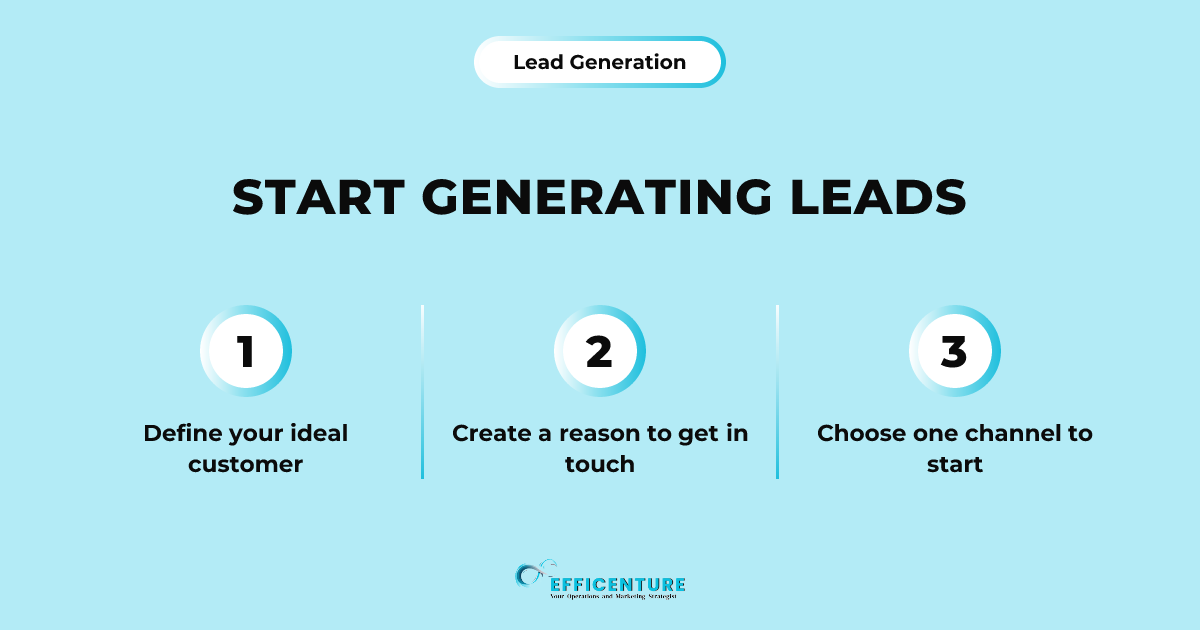
To start lead generation, decide exactly who you want to reach, give them a clear reason to get in touch, choose one channel where they already look for businesses like yours, make it easy to enquire, follow up quickly, and track which enquiries become customers. Start small with one channel, learn what works, then add more. Most businesses that struggle with lead generation try too many things at once and measure none of them.
A lead is a potential customer who has shown interest by getting in touch or sharing their details: a form submission, a WhatsApp message, a call, a booking request or a visit to your premises. Lead generation is the system that produces a steady flow of them.
Step 1: Define your ideal customer
You can't attract the right leads until you know who they are. Write a short description of your best customers.
- Who are they? For consumers: age range, location, income level, life stage. For businesses: industry, size, location, role of the decision-maker.
- What problem do they have when they look for you?
- What triggers the search? A move, a new baby, a breakdown, a new regulation, business growth, a failed supplier?
- Where do they look for help? Google, Maps, Instagram, TikTok, LinkedIn, WhatsApp groups, friends?
- What makes them choose one business over another? Price, speed, trust, location, expertise?
The best source for this is your existing customers. Ask five or ten of them how they found you and why they chose you. Their answers will shape everything else.
Step 2: Create a reason to get in touch
People need a reason to contact you now rather than later or never. That reason is your offer.
Make the main offer clear
State plainly what you do, for whom and what result they get. "We install home solar systems in Nairobi and Kiambu, with a free site assessment and a written quote within 48 hours" is far stronger than "Quality solar solutions".
Lower the first step
Many people aren't ready to buy straight away. Give them a smaller, easier first step:
- A free consultation, assessment or quote
- A price guide or checklist
- A short demo or trial
- A sample, tasting or first-visit discount
Answer the obvious questions
Price, timing, process and location are the questions almost every lead asks. Answer them on your website and in your profiles, at least as a range. Clear information produces better-qualified enquiries.
Step 3: Choose one channel to start
Pick the channel where your ideal customers already look for businesses like yours. Common starting points:
Google Business Profile and local search
For businesses serving a local area, such as clinics, salons, repair services, restaurants and professional firms, a complete Google Business Profile with reviews is often the best first channel. It's free and reaches people actively searching nearby.
Google Search Ads
For services people search for when they need them, such as plumbing, legal help, accounting or equipment hire, search ads bring enquiries quickly. Start with a small budget and a few specific searches.
Social media
For visual products and services, or businesses with a younger audience, Instagram, Facebook or TikTok can work well, especially with ads that open WhatsApp chats.
LinkedIn and direct outreach
For B2B services, LinkedIn and personal outreach to well-chosen companies often work better than broad advertising.
Referrals
For almost any business, a simple referral routine, asking every satisfied customer whether they know someone who'd benefit, is cheap and effective.
Give your chosen channel two to three months of steady effort before judging it.
Step 4: Make it easy to enquire
Every lead source should lead somewhere that makes getting in touch simple.
- A focused landing page or service page that explains the offer and answers the main questions.
- Several contact options: WhatsApp, phone, a short form and, if relevant, online booking.
- Short forms. Ask only what you need to respond well: name, contact, and one or two questions about their need.
- Mobile-friendly design, since most visitors in Kenya will be on a phone.
- A clear thank-you message saying what happens next and when.
Step 5: Follow up fast
Speed of response is one of the biggest factors in whether a lead becomes a customer. People often contact several businesses and choose the one that replies first with a helpful answer.
- Set a response target, such as within 30 minutes during working hours.
- Name the person responsible for replying, and who covers for them.
- Use quick replies on WhatsApp for common questions.
- Follow up at least twice if there's no response, politely and with something useful.
- Move promising leads to a call or meeting when that helps.
Step 6: Track every lead
Set up simple tracking from day one.
- Google Analytics 4 to record form submissions, WhatsApp clicks and phone clicks by source.
- A lead log, in a spreadsheet or simple CRM, with the date, source, name, need, who handled it and the outcome.
- Ask every new lead how they found you, and record the answer.
At the end of each month, look at leads by source, how many became customers and what each source cost.
Step 7: Improve, then expand
After two or three months, you'll have real numbers. Use them.
- If leads are few, improve visibility or the offer: better keywords, stronger content, more reviews, a clearer reason to get in touch.
- If leads are many but poor, tighten targeting and make your page clearer about who you serve and what it costs.
- If leads are good but few become customers, improve follow-up, the sales conversation or pricing.
- If the channel works, increase investment gradually, then add a second channel and measure it the same way.
A simple 30-day starter plan
Week 1: Interview five customers. Write your ideal customer description and your main offer.
Week 2: Update your Google Business Profile, website contact options and WhatsApp Business profile. Set up GA4 tracking for forms, calls and WhatsApp.
Week 3: Launch your first channel, such as a small Google Search campaign, a referral request to past customers or a review drive.
Week 4: Respond to every lead fast, record each one in the lead log, and hold your first review.
Common mistakes
- Targeting everyone. Vague targeting brings vague leads.
- No clear offer. If people don't know why to contact you now, they won't.
- Too many channels at once. You can't tell what works.
- Slow follow-up. Good leads go cold within hours or days.
- No tracking. Without it, you can't improve.
- Buying contact lists. They're usually outdated, and contacting people without a lawful basis can breach Kenya's Data Protection Act, 2019.
How many leads do you actually need?
Work out a target before you start, so you know what success looks like. Begin with the number of new customers you want each month, then work backwards using your conversion rate.
For example, if you want six new customers a month and roughly one in four qualified leads becomes a customer, you need about 24 qualified leads. If about two in three enquiries are qualified, you need around 36 enquiries a month. These figures are illustrative, but the method works for any business.
Check that your team can handle that number. Thirty-six enquiries a month means more than one a day to answer, qualify and follow up. If that's more than the team can manage well, fix capacity first, or you'll pay to generate leads that go cold.
What should your first lead log include?
Keep it simple enough that the team actually fills it in. One row per enquiry, with these columns:
- Date and time received
- Name and contact
- Source, such as Google, Instagram, referral or walk-in
- What they asked for
- Who is handling it
- Status: new, contacted, quoted, won or lost
- Reason if lost, such as price, timing or no reply
- Value if won
After a month, the "reason if lost" column alone often shows what to fix.
How do you write a lead offer people respond to?
A good offer is specific, useful and easy to say yes to. Compare "Contact us for more information" with "Get a free 20-minute call to review your payroll setup, with a written list of fixes within two days". The second tells people exactly what they get, how long it takes and what happens next.
Test two versions of your offer for a few weeks each and keep the one that brings more qualified enquiries.
How Efficenture can help
Efficenture builds lead generation systems for Kenyan businesses, from defining the ideal customer and offer to running the first channel, setting up tracking and improving follow-up. Learn more about our lead generation service, or see how analytics and reporting shows which leads become customers.
We're based in Nairobi and work with businesses across Kenya and East Africa. Book a consultation and we'll help you choose the right first channel for your business.
Frequently asked questions
What is lead generation?
Lead generation is the process of attracting potential customers and getting them to show interest, for example by sending a WhatsApp message, filling in a form, calling or booking. It's the first stage of winning new customers.
What is the best lead generation channel for a small business?
It depends on how your customers look for businesses like yours. Local businesses often start with Google Business Profile and reviews. Service businesses with search demand do well with Google Ads. B2B firms often start with LinkedIn and referrals.
How much does it cost to start lead generation?
You can start with little money by improving your Google Business Profile, asking for reviews and referrals, and setting up WhatsApp Business. Paid channels such as Google Ads need a budget large enough to produce several enquiries a month.
How quickly should I follow up on a lead?
As fast as possible, ideally within 30 minutes during working hours. Many customers contact several businesses and choose the first one that responds helpfully.
How do I know if my lead generation is working?
Track leads by source, how many become customers, and what each source costs. If cost per customer is comfortably below what a customer is worth, it's working.
Weekly Insights
One useful idea a week, on what you care about
A two-minute weekly briefing for growing businesses: the insight worth knowing on each topic you pick, why it matters, one thing to do that week, and the guides that go deeper. Unsubscribe any time.