LinkedIn Conversion Tracking Setup Guide for Businesses
Learn how to configure the LinkedIn Insight Tag, Conversions API, and offline tracking to accurately measure high-value business leads and ad returns.
What is LinkedIn conversion tracking and how does it work?
LinkedIn conversion tracking is a feature inside LinkedIn Campaign Manager that measures the actions users take on your website or within native lead forms after they view or click an ad. It uses a lightweight Javascript snippet called the Insight Tag alongside event rules or server-side data feeds to match site activity with user accounts.
When a professional clicks your LinkedIn ad, a unique click identifier attaches to their session. If that visitor completes a designated conversion action on your website, such as submitting a quote request or scheduling a consultation, LinkedIn registers the conversion. The platform calculates cost per conversion, conversion rate, and return on ad spend directly inside your reporting dashboard.
Relying solely on client-side tracking through browser scripts can leave blind spots. Modern web browsers block third-party cookies, and ad-blockers often prevent browser tags from loading entirely. To build a reliable measurement setup, growing companies combine browser tags with direct server-side data feeds. Businesses requiring dedicated support with tag architecture can explore our tailored conversion tracking services.
How to set up the LinkedIn Insight Tag using Google Tag Manager
The fastest way to deploy the LinkedIn Insight Tag across your website is by using Google Tag Manager. Using a container tag avoids editing your site code directly every time you adjust a tracking parameter or create a new campaign rule.
Step 1: Retrieve your Partner ID from LinkedIn Campaign Manager
Log into LinkedIn Campaign Manager and select your ad account. Click the Analyze dropdown menu on the left menu bar, then select Insight Tag.
Select the option to install the tag using a tag manager. LinkedIn will display your unique Partner ID, which is an eight-digit number. Copy this code to your clipboard.
Step 2: Configure the Insight Tag in Google Tag Manager
Open your Google Tag Manager container, navigate to Tags, and click New. Name your tag LinkedIn - Insight Tag.
Click Tag Configuration and choose the official LinkedIn Insight Tag template from the Community Template Gallery or standard tags list. Paste your Partner ID into the designated field. Set the trigger to All Pages so the script initialises on every page visit across your website.
Step 3: Publish and verify the tag installation
Save the tag configuration and click Preview in Google Tag Manager to enter debug mode. Visit your website in a new browser tab and confirm that the LinkedIn Insight Tag fires successfully on page load.
Return to Google Tag Manager and click Submit to publish your workspace changes. In LinkedIn Campaign Manager, the Insight Tag status will change from Unverified to Active once your site sends its first pageview signal. For a broader walkthrough on container tags, read our Google Tag Manager setup guide.
How to track specific conversion events on your website
Tracking general page visits shows overall audience reach, but measuring specific business conversion events reveals lead quality. A conversion event triggers only when a user completes a high-value action, such as submitting a consultation request form, downloading an enterprise whitepaper, or completing a booking.
URL-based conversion rules
URL-based tracking is the simplest method for tracking conversions without custom code. Use this approach when a form submission redirects the user to a dedicated thank-you page with a unique URL, such as `/thank-you-consultation`.
In LinkedIn Campaign Manager, navigate to Analyze, select Conversions, and click Create Conversion. Name your conversion, select the relevant action type, for instance Lead or Signup, and specify the conversion window. Under the content settings, select Page Load and set the rule to trigger when the page URL Contains your thank-you page path.
Event-based conversion rules using Google Tag Manager
When your form submits dynamically without changing the page URL, you must send a custom event tag to LinkedIn. In Google Tag Manager, create a new tag and select the LinkedIn Insight Tag template. Enter your Partner ID as before.
Under Track Action, select Custom Event. Define an event name in Tag Manager that matches the event name you specify inside LinkedIn Campaign Manager. Set a trigger that fires when the user submits your form or clicks your call-to-action button. Save and publish your container.
Integrating these event signals into your overall enterprise reporting gives your leadership team clear visibility into acquisition costs. For custom implementation, review our analytics and reporting services.
How to set up the LinkedIn Conversions API for server-side accuracy
The LinkedIn Conversions API connects your website server or CRM directly to LinkedIn, bypassing browser limitations and cookie restrictions. Server-side tracking ensures that high-value B2B lead events are recorded accurately even when client-side scripts are blocked.
+-------------------+ Client-Side (Browser Tag) +-----------------------+
| User Browser |-------------------------------------->| LinkedIn Ad Platform |
+-------------------+ +-----------------------+
| ^
| Direct Web Event / Form Submission | Server-Side Data
v | (CAPI Sync)
+-------------------+ Server-Side Direct Feed +-----------------------+
| Your Web Server / |-------------------------------------->| Conversions API |
| CRM System | (Hashed Email, Phone, Event ID) | Engine |
+-------------------+ +-----------------------+
Why server-side tracking matters for high-ticket sales
Browser-based tags miss conversions due to content blockers, fast page exits, or strict privacy settings on mobile operating systems. In business-to-business sales where securing a single institutional client can yield millions of shillings in contract value, losing attribution data leads to misinformed budget decisions.
Server-side implementation passes conversion events directly from your database to LinkedIn. This creates a secure data pipeline that improves match rates and campaign optimisation capabilities.
Steps to set up the Conversions API via middleware or custom integrations
You can deploy the Conversions API through direct code implementation on your web server or by using cloud middleware tools like Google Tag Manager Server-Side or Zapier.
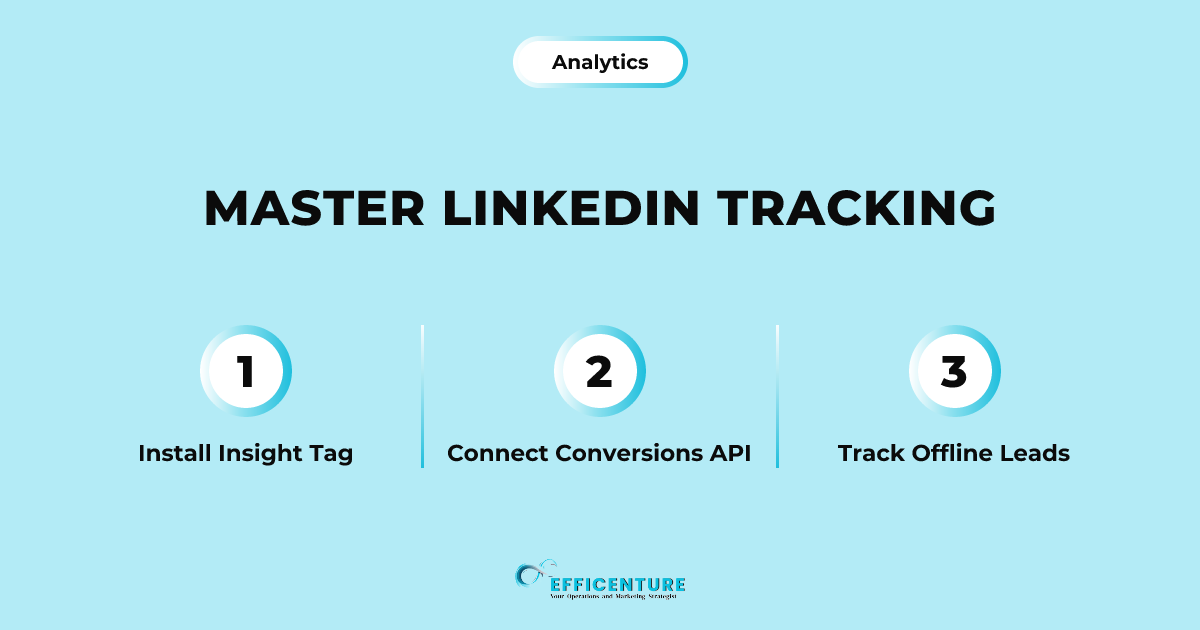
- Generate an API Access Token: Navigate to the LinkedIn Developer Portal, create or select your application, and request access to the Conversions API endpoint. Generate an OAuth access token with the necessary permissions.
- Collect first-party user identifiers: Ensure your web forms securely capture user data points such as work email addresses, phone numbers, and full names upon form submission.
- Hash customer information: SHA-256 hash all user-identifiable data on your server before transmitting it to LinkedIn to maintain strict compliance with data privacy regulations.
- Send the event payload: Construct a POST request to the LinkedIn Conversions API endpoint containing the hashed customer data, timestamp, event name, and original conversion click ID if available.
- Deduplicate browser and server events: Use a shared `event_id` variable across both the client-side Insight Tag and the server-side API call. LinkedIn automatically deduplicates duplicate events received within a 48-hour window.
How to track LinkedIn Lead Gen Forms and offline conversions
LinkedIn Lead Gen Forms allow users to submit their contact information directly inside the LinkedIn mobile app or desktop feed without visiting your website. These forms deliver high completion rates, but tracking them requires bridging native platform data with your internal sales management tools.
Tracking native Lead Gen Forms
When you run Lead Gen Form campaigns, LinkedIn records form submissions automatically inside Campaign Manager. However, to evaluate lead quality, you must route those entries directly into your customer relationship management software.
Connect your LinkedIn ad account to your CRM using native platform integrations or webhook connectors. Map the lead form fields to your internal lead scoring criteria. Ensure your sales team records when a lead converts into an active pipeline opportunity or a signed agreement.
Uploading offline conversions to measure full-pipeline revenue
Closing enterprise deals often takes weeks or months. A prospect might fill out a form in March, attend a demonstration in April, and sign a contract in May. Offline conversion tracking attributes that final purchase back to the original LinkedIn campaign.
In LinkedIn Campaign Manager, create an Offline Conversion. Prepare a CSV file containing your converted customer data, including work emails, transaction dates, and deal values recorded in local currency such as KES.
Upload this file periodically or automate the upload using Zapier or custom webhooks. LinkedIn matches the offline transactions with historical ad interactions, providing an accurate view of overall return on ad spend. You can run a free check on your site tracking setup with our marketing audit tool.
Verifying your LinkedIn tracking setup and attribution settings
Setting up tracking tags is only half the task; verifying that data flows cleanly into your reporting views ensures your marketing decisions rest on accurate data.
| Attribution Setting | Default Window | Recommendation for Long Sales Cycles |
| :--- | :--- | :--- |
| Click-Through Window | 30 Days | 30 to 90 Days |
| View-Through Window | 7 Days | 1 to 7 Days |
| Attribution Model | Last Touch - Last Campaign | Last Touch or Multi-Touch (CRM Based) |
| Event Deduplication | Automatic (via Event ID) | Mandatory when combining Tag + CAPI |
Testing tag signals in Campaign Manager
After setting up your conversion events, trigger a test submission on your website. Use a test corporate email address and submit the form under realistic user conditions.
Open LinkedIn Campaign Manager and navigate to the Conversions tab. Check the status column for your event. A healthy status reads Active and displays a recent timestamp under the Last Event Received column. If the status remains Unverified or No Recent Events, check your Tag Manager triggers and ensure your website script is not blocked by caching plugins.
Choosing the right attribution window for long sales cycles
LinkedIn offers default attribution windows of 30 days for click-through conversions and 7 days for view-through conversions. Click-through attribution records a conversion if a user clicks your ad and converts within the chosen timeframe. View-through attribution counts conversions if a user sees your ad, does not click, but later converts on your site.
For short-cycle consumer services, shorter windows work well. For high-value professional services, trade logistics, or institutional offerings, consider extending your click-through window to 90 days. This captures buyers who conduct internal evaluations before submitting a final proposal request. To align your ad strategy with qualified pipeline growth, explore our B2B lead generation services.
Connecting LinkedIn conversion metrics to business financials in East Africa
A successful conversion tracking setup should provide clear operational data that informs finance and leadership teams. Tracking web forms and phone calls matters only when those metrics tie directly into profitability and acquisition metrics expressed in KES.
Calculating accurate cost per qualified lead
Raw lead numbers can mislead business leaders. A campaign that generates 50 leads at KES 3,000 each seems cheaper than one generating 10 leads at KES 12,000 each. However, if none of the KES 3,000 leads purchase, that ad spend is lost.
By tying LinkedIn conversion events to CRM milestones, you calculate the cost per qualified lead and cost per acquisition.
Suppose an equipment supplier in Eldoret spends KES 400,000 on a LinkedIn ad campaign targeting factory managers. The campaign generates 20 form submissions at KES 20,000 per lead. Tracking shows that 5 of those leads booked site visits, and 2 purchased machinery worth KES 8,500,000 total.
Because conversion tracking linked those 2 closed deals back to the original ad group, the business owner can confidently allocate further capital to that specific campaign strategy.
Tracking multi-currency ad spend and campaign value
LinkedIn bills ad accounts in major currencies like USD or EUR, or local options depending on account settings. When assessing campaign performance alongside local operating expenses, account for currency exchange fluctuations.
Record your ad spend and resulting conversion values in your main accounting currency. If your ad account bills in USD, convert conversion values into KES using the transaction day's spot rate when evaluating overall account return. Track these metrics systematically by reviewing key performance indicators explained in our practical guide on marketing KPIs for small business.
Common LinkedIn conversion setup errors and how to fix them
Even experienced marketing teams encounter tracking issues that distort ad performance metrics. Correcting these errors early prevents reporting discrepancies.
Issue 1: Missing trigger parameters on dynamic web forms
Modern websites often process forms using AJAX or single-page application architectures. Standard page view triggers fail to capture these submissions because the page does not refresh.
Fix: Create a custom event trigger in Google Tag Manager that listens for the form's success response callback, or fire a `dataLayer.push()` event when the submission completes successfully.
Issue 2: Double-counting conversions from page refreshes
If your conversion rule relies on a basic thank-you page URL, users who refresh the confirmation page or return to it later via browser history will fire duplicate conversion tags.
Fix: Set your Google Tag Manager tag firing options to Once per page or Once per event. Alternatively, clear the session URL after the initial page load so subsequent visits do not trigger the tracking script.
Issue 3: Discrepancies between Google Analytics and LinkedIn reports
Marketing managers often notice that LinkedIn reports higher conversion numbers than Google Analytics 4 for the same timeframe.
Fix: This difference occurs because LinkedIn defaults to cross-device and view-through attribution, whereas Google Analytics 4 uses last-click or data-driven attribution based primarily on session source parameters. Ensure your internal reporting dashboards account for these structural differences in measurement methodology.
Build an accurate measurement system with Efficenture
Deploying an accurate conversion tracking framework across your website, CRM, and ad accounts requires technical precision and strategic insight. At Efficenture, we help growing companies establish transparent tracking infrastructure that links marketing spend directly to business growth and sales metrics.
Based in Nairobi, our team works with businesses across Kenya, East Africa, and international markets to design, test, and maintain solid analytics foundations. Whether you need to fix existing tracking tags, set up the LinkedIn Conversions API, or connect your campaign dashboards to real-world sales performance, we ensure every marketing shilling is accounted for.
Take control of your advertising investments and simplify your campaign metrics today. Contact our technical team through our analytics and reporting services or call us directly on +254 714 146 122 to schedule an initial review of your tracking setup.
Frequently asked questions
How long does it take for the LinkedIn Insight Tag to become active after setup?
The LinkedIn Insight Tag usually updates its status from unverified to active within 10 to 30 minutes after receiving its first valid website pageview signal. You can verify the connection immediately by visiting your site with the Google Tag Manager preview mode active.
What is the difference between client-side and server-side tracking on LinkedIn?
Client-side tracking uses Javascript running in the visitor's web browser to record events, which can be blocked by ad-blockers or privacy settings. Server-side tracking uses the LinkedIn Conversions API to send verified lead data directly from your web server or CRM to LinkedIn, ensuring higher data accuracy.
Can I track LinkedIn conversions without installing code on my website?
Yes, you can track native LinkedIn Lead Gen Forms directly inside Campaign Manager without editing website code. However, to track what happens when users visit your website or convert through offline sales processes, you must deploy the Insight Tag or the Conversions API.
Why do my LinkedIn campaign conversions differ from Google Analytics 4 data?
LinkedIn counts view-through and multi-device interactions using its own attribution window, whereas Google Analytics 4 relies heavily on session-based, last-click models. Differences in cookie retention rules and consent choices between platforms also lead to varying reporting figures.
Weekly Insights
One useful idea a week, on what you care about
A two-minute weekly briefing for growing businesses: the insight worth knowing on each topic you pick, why it matters, one thing to do that week, and the guides that go deeper. Unsubscribe any time.