SEO ·
SEO for Law Firms in Kenya: Practice Area Search Strategy
Sustainable client acquisition for law practices requires an SEO strategy tailored to legal search intent and local compliance rules. Here is how to structure your firm's online visibility step by step.
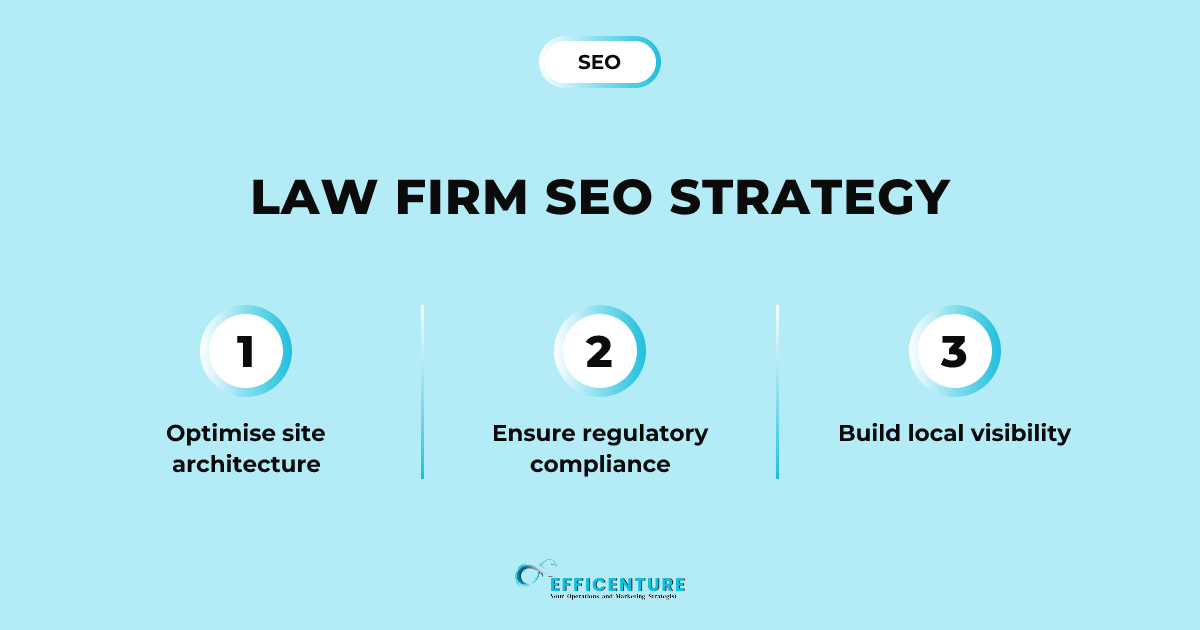
SEO for law firms in Kenya is the process of structuring a legal practice website so prospective clients find the firm when searching for specific services. It combines technical website setup, targeted content, and compliance with local legal advertising rules.
When potential clients face legal challenges, such as land disputes in Nakuru or probate processes in Eldoret, their first action is often an online search. A structured approach to SEO for law firms ensures your practice appears when these searches happen, turning online intent into consultations.
How do legal searchers find advocates online?
Legal searchers in Kenya look for advocates by searching for specific legal problems or location-based services. They rarely search for generic legal terms, preferring queries tied directly to their immediate personal or business needs.
Search intent in the legal sector falls into three main categories.
Informational legal searches
Informational queries occur when individuals or business managers research a legal issue before hiring representation. Examples include questions about land transfer procedure taxes or the requirements for registering a foreign business entity.
These searchers want objective information. Providing clear answers on your website establishes expertise long before a client schedules an initial consultation.
Transactional legal searches
Transactional queries represent immediate legal needs. Searchers use terms such as "conveyancing advocate in Kisumu," "intellectual property lawyer," or "commercial arbitration law firm."
These users already know they need representation. They evaluate search results based on practice area specificity, firm location, and clear contact mechanisms. Understanding these pathways is part of how advocates build consistent client pipelines, as detailed in our guide on how advocates get clients in Kenya.
Navigational legal searches
Navigational searches occur when someone searches directly for your firm name or a partner name. These searchers are often referrals verifying your credentials, checking your physical address, or finding your office phone number.
Your website and local listings must present consistent details to ensure prospective clients complete their intended enquiry.
How do the Advocates Rules 2014 affect legal SEO?
The Advocates (Marketing and Advertising) Rules, 2014 govern how law firms in Kenya present themselves online, prohibiting false claims, direct client comparison, and self-laudatory statements. Legal SEO must focus strictly on factual presentation, professional credentials, and legal commentary rather than promotional copy.
Compliance requires careful oversight of every published page, title tag, and meta description.
| COMPLIANT LEGAL SEO CONTENT CHECKLIST | | --- | | [ ] Uses objective legal analysis and accurate statutory quotes | | [ ] Avoids comparison phrases like "cheapest advocate" or "best" | | [ ] Omits client testimonials, win rates, or success claims | | [ ] Displays clear physical office address and advocate details | | [ ] Focuses on practice areas, jurisdiction, and legal procedure |
Prohibited phrases in legal metadata
Search engine title tags and meta descriptions must be crafted without comparative claims. Phrases such as "the best divorce lawyer," "top conveyancing advocate," or "guaranteed court outcomes" violate professional regulations and should never appear on your website.
Instead, frame your search engine titles around practical descriptions of services, such as "Conveyancing and Property Law Services," "Corporate Legal Advisory," or "Employment Law Advocates."
Educational content as a compliant growth strategy
Publishing educational guides on legal framework updates, tax court rulings, or regulatory changes allows firms to capture legal search traffic cleanly.
By offering authoritative statutory explanations without aggressive selling tactics, you align with professional standards while building organic visibility. Reviewing the regulations outlined in law firm marketing in Kenya helps ensure all written material remains compliant.
How should a law firm structure its website architecture?
A law firm should structure its website architecture around individual practice area pages, clear attorney profiles, and logical internal linking. Search engines index specific pages, not entire websites at once, so each practice area requires its own dedicated URL.
Grouping all services onto a single page dilutes search context and makes it difficult for search engine bots to determine your firm core focus.
Creating dedicated practice area pages
Rather than listing "Commercial Law, Family Law, and Litigation" on one generic page, build individual pages for each legal discipline. A commercial law firm might structure its site hierarchy like this:
- /services/commercial-law/
- /services/commercial-law/company-incorporation/
- /services/commercial-law/joint-ventures/
- /services/tax-law/corporate-tax-disputes/
This clear structure helps search engines index your pages for precise searches. It also allows prospective clients to land directly on the legal service relevant to their situation.
Implementing a systematic approach to Search Engine Optimization allows your firm to build depth across every practice area you offer.
Structuring advocate bio pages
Advocate profile pages are frequently among the most visited pages on a law firm site. Search engines evaluate these pages to understand the qualifications and background of the authors publishing legal guidance.
Each bio page should include:
- Full legal name and professional title.
- Admissions, qualifications, and academic background.
- Primary practice focus areas.
- Links to legal articles or analysis authored by the advocate on the firm website.
Avoid unsubstantiated claims regarding trial performance or settlement figures. Keep profiles objective, thorough, and professional.
What technical SEO factors matter most for law practices?
Technical SEO for law firms centers on web page security, mobile page speed, structured data markup, and simple site navigation. Technical defects create friction for users and prevent search engine crawlers from indexing legal content properly.
Evaluating your site through a structured process, such as running a free SEO audit, reveals hidden technical issues that block prospective clients from reaching your site.
Website security and SSL certification
Legal clients expect confidentiality from the moment they visit your website. An active Secure Sockets Layer certificate is a mandatory technical requirement for any legal practice website.
Search engines penalise sites that transmit data over unencrypted HTTP connections. Ensure all contact forms, consultation booking engines, and information pages operate securely.
Mobile optimization and page speed
A significant portion of legal search traffic originates on mobile devices, often when individuals require urgent legal assistance away from an office desk. If your website takes longer than three seconds to load over local mobile data networks, users will leave.
Optimise images, reduce unnecessary script execution, and select light web design frameworks. Fast-loading pages keep prospective clients engaged and signal operational quality to search engine systems.
Schema markup for legal services
Schema markup is structured code placed on a website to help search engine algorithms understand specific business attributes. For legal practices, implementing `LegalService` schema helps engines identify your office address, telephone numbers, opening hours, and accepted payment options.
{
"@context": "https://schema.org",
"@type": "LegalService",
"name": "Example Advocates LLP",
"address": {
"@type": "PostalAddress",
"streetAddress": "Commercial Street",
"addressLocality": "Eldoret",
"addressCountry": "KE"
},
"telephone": "+254700000000",
"priceRange": "KES"
}
Adding structured code ensures search engines display accurate snippet information alongside your search listings.
How do law firms build local search visibility?
Law firms build local search visibility by optimising their Google Business Profile, managing location data consistently across business directories, and acquiring local legal citations. Local search elements, such as map listings, frequently appear above organic text results for location-based searches.
For regional practices in towns like Thika, Nyeri, or Kericho, local search optimisation is often the primary source of online enquiries.
Optimising your Google Business Profile
Your Google Business Profile serves as an online storefront for local clients. To ensure your profile functions effectively, keep all operational metrics updated:
- Primary Category: Select the most accurate primary category, such as "Law Firm," "Legal Services," or "Conveyancer."
- Physical Address: Ensure your suite number, building name, and road match your physical office location.
- Operating Hours: Keep regular office hours accurate, updating them promptly for public holidays.
- Direct Phone Line: Provide a working direct telephone line, preferably formatted with regional dialling codes.
Consistently maintaining these details helps your practice rank effectively within geographic map searches. Further tactical steps can be reviewed in our breakdown on how to rank on Google Maps in Kenya.
Managing local citations and directory listings
A citation is any online mention of your firm name, address, and phone number. Inconsistent address formats across legal directories cause search engine algorithms to doubt your location accuracy.
Standardise your office details across legal databases, corporate registries, and business directories. If your office address changes, update every external listing immediately to prevent split search equity.
| LOCAL CITATION ACCURACY CHECKLIST | | --- | | Official Law Firm Name: [ Exact match across all directories ] | | Physical Office Location: [ Same building name, office number ] | | Phone Number Format: [ Standardised local or mobile format ] | | Business Website URL: [ Includes preferred https:// address ] |
How do you demonstrate E-E-A-T for legal search engine rankings?
Search engines evaluate legal topics under strict quality standards known as Your Money or Your Life. Because legal advice directly impacts a person financial status, freedom, or well-being, websites offering legal information must demonstrate high levels of Experience, Expertise, Authoritativeness, and Trustworthiness.
Firms that publish shallow or inaccurate legal summaries find it difficult to maintain organic visibility over time.
Publishing authoritative legal analysis
Demonstrate expertise by publishing detailed breakdowns of recent statutory amendments, legal precedents, or court decisions.
Instead of writing a broad summary on contract law, publish a focused analysis covering specific clauses required in commercial property leases under regional land acts. Detailed analysis signals to search engines that your firm provides real professional depth.
Referencing official legal sources
When writing legal guides, always reference primary legal sources. Cite specific sections of statutory acts, official gazette notices, or official court judgments.
Linking out to authoritative legislative bodies or official judicial portals reinforces the accuracy of your content. It demonstrates to both search engines and readers that your commentary is grounded in established law.
Maintaining editorial oversight
Every article published on a law firm website must be reviewed and verified by a qualified advocate before publication. Add clear author bylines to articles, showing the advocate full name, credentials, and professional background.
Including an explicit note stating the article was reviewed by an advocate builds trust with readers and search evaluation systems alike.
How do you measure legal SEO performance effectively?
Legal SEO performance should be measured using business indicators such as consultation requests, phone calls, and case leads rather than vanity metrics like total website hits. Organic traffic is valuable only when it generates actual enquiries for your practice areas.
Setting up proper tracking tools ensures you see which content attracts paying clients.
Tracking conversion events
A conversion occurs when a search visitor takes a clear action toward becoming a client. Key legal conversions include:
- Submitting a contact form requesting legal representation.
- Clicking a direct phone link from a mobile device.
- Booking an initial consultation through an online calendar system.
- Downloading a legal checklist or whitepaper.
Implementing web tracking allows you to connect specific search terms to direct client actions. You can inspect your measurement architecture using dedicated conversion tracking frameworks to ensure no lead data goes missing.
Measuring search engine performance metrics
Track your performance metrics using tools like Google Search Console and GA4. Monitor these key performance indicators monthly:
| Metric | Purpose | Target Direction |
| :--- | :--- | :--- |
| Non-Branded Clicks | Measures visitors finding you via service keywords | Consistent Increase |
| Organic Conversion Rate | Percentage of organic visitors who contact your firm | Steady Growth |
| Average Page Load Time | Speed at which mobile users receive page content | Under 3 Seconds |
| Top Practice Area Rankings | Position for specific legal service searches | First Page Visibility |
Analysing these metrics allows your firm to allocate marketing resources toward practice areas with the highest potential return.
How to build an operational workflow for legal content creation
Executing a successful SEO strategy requires a predictable operational process. Law firm partners and senior associates are often busy with active cases, making it difficult to maintain consistent publishing schedules without a clear workflow.
Establishing a structured operational pipeline ensures content gets drafted, reviewed, and published without disrupting billable work.
| LEGAL CONTENT PRODUCTION WORKFLOW | | --- | | Step 1: Identification | | Select target legal topics based on client search queries. | | Step 2: Drafting | | Prepare structured content outlining statutory procedures. | | Step 3: Legal & Compliance Review | | Verify statutory citations and check against Advocates Rules. | | Step 4: Technical Formatting | | Apply title tags, structured headers, and internal links. | | Step 5: Publishing & Tracking | | Publish guide and monitor enquiry conversion rates. |
Step 1: Assign specific topic ownership
Assign practice area topics to specific associates based on their daily caseloads. A litigation associate can focus on civil procedure updates, while a corporate associate covers business registration and compliance guidelines.
Clear topic ownership prevents confusion and ensures published content reflects genuine legal experience.
Step 2: Establish a monthly publishing calendar
Commit to a realistic publishing cadence, such as two thoroughly researched, compliant legal guides per month. Consistency is far more effective than publishing ten short articles in one week and nothing for the next six months.
Maintain a central editorial calendar detailing article topics, target search intent, assigned authors, review deadlines, and target launch dates.
Step 3: Formalise the compliance review
Before any article goes live, run it through a final compliance check:
- Are all statutory references up to date?
- Is the content free of comparative adjectives or self-laudatory claims?
- Are advocate credentials accurately represented?
- Do link destinations direct readers to verified external or internal pages?
This simple review process protects the firm reputation while maintaining strict alignment with professional advertising standards.
Expand your firm reach with Efficenture
Developing a compliant, high-performing legal SEO strategy requires technical accuracy, regulatory knowledge, and operational discipline. At Efficenture, we help legal practices across Kenya build search engine visibility that generates real consultation requests.
Our team, based in Nairobi, works closely with law firms to audit existing web infrastructure, resolve technical issues, and execute content strategies aligned with local legal advertising frameworks. Explore our complete digital marketing services to see how we help growing firms build a sustainable online presence.
To discuss your law firm search visibility strategy, call or WhatsApp us on +254 714 146 122 today.
Frequently asked questions
Can law firms in Kenya use SEO to advertise their services?
Yes, law firms in Kenya can use SEO to attract prospective clients online. However, all published content, metadata, and site messaging must strictly comply with the Advocates (Marketing and Advertising) Rules, 2014. This means avoiding comparative claims, self-laudatory statements, client testimonials, or promises regarding court outcomes.
How long does it take for a legal website to rank on search engines?
Search engine indexing and ranking for a law firm website typically takes between three to six months to show meaningful momentum. Timelines depend on site history, technical health, competition within specific practice areas, and the frequency of publishing authoritative legal content.
What is the most important SEO factor for law practices?
The most critical factor is establishing Experience, Expertise, Authoritativeness, and Trustworthiness through comprehensive practice area pages and compliant legal analysis. This must be supported by an HTTPS-secured, fast-loading mobile website and an updated Google Business Profile.
Should a law firm create separate pages for every legal service?
Yes, creating dedicated pages for distinct practice areas helps search engines understand the exact scope of your legal services. It allows your site to rank for targeted legal queries and ensures prospective clients land on pages directly relevant to their legal issues.
How do local map listings help legal practices attract clients?
Local map listings show your practice physical address, operational hours, and contact details directly above regular organic search results for location-specific queries. Optimising your Google Business Profile helps nearby prospective clients locate and call your office quickly.
Weekly Insights
One useful idea a week, on what you care about
A two-minute weekly briefing for growing businesses: the insight worth knowing on each topic you pick, why it matters, one thing to do that week, and the guides that go deeper. Unsubscribe any time.