Ads ·
AI Bot Advertising: Strategy, Placements, and Setup
AI bot advertising includes placing sponsored context ads inside AI engines and running smart agents on ad destination pages. Here is how to execute both.
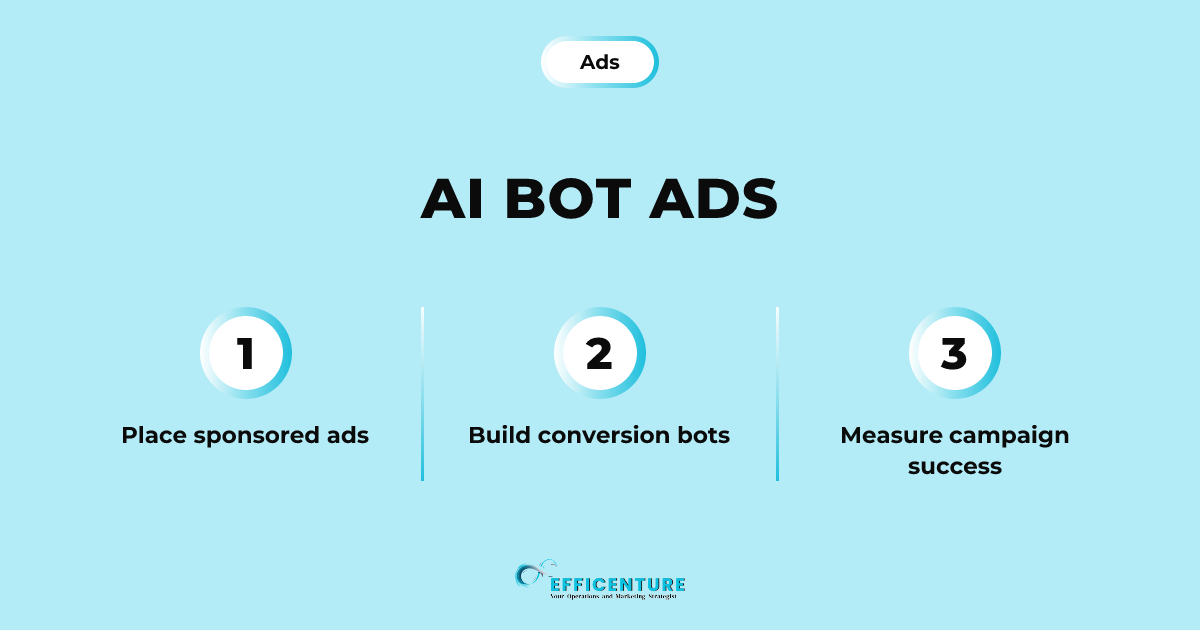
AI bot advertising refers to two distinct commercial strategies. You can place paid promotional content directly inside conversational AI platforms like ChatGPT, or you can use automated AI agents to interact with leads coming from paid ad campaigns. Both methods turn conversational intent into measurable sales while maintaining context and user trust. Growing companies across East Africa use these tactics to capture qualified leads at the precise moment they seek solutions.
What is AI bot advertising?
AI bot advertising combines generative artificial intelligence with digital media buying to place sponsored recommendations into real-time user chats, or to run automated conversations on campaign landing pages. Instead of relying on static display banners or generic search results, this model analyses user intent directly within a conversation to present targeted solutions.
Understanding how conversational interfaces handle promotional messages helps you choose the right approach for your budget. To see how sponsored prompts work within specific conversational models, read our guide on AI chat advertising.
Commercial AI platforms process millions of user queries daily, ranging from business software requests to personal finance questions. When a user asks an AI assistant for recommendations, the system can insert relevant, sponsored suggestions directly into the answer stream. Alternatively, businesses install custom conversational bots on their own web properties to receive traffic from traditional paid channels like Google Search or social media ads.
Both approaches focus on immediate interaction. Rather than asking a user to read a static text page and fill in a long contact form, AI bot advertising engages the user in a dialogue, answering specific objections and qualifying leads in real time.
AI platform ad placements compared to destination AI bots
Businesses often confuse placing ads inside artificial intelligence platforms with using AI bots on their own web properties to manage campaign visitors. Clear differentiation between the two models allows you to allocate media spend effectively.
In platform-side advertising, your business pays to feature your products or services directly within the response generated by an AI assistant. For instance, when a user asks an AI assistant for the best commercial solar installer in Kenya, a sponsored recommendation appears alongside the organic answer. The ad fits naturally into the conversation, matching the prompt topic.
In landing-page advertising, paid search or social ads direct traffic to your site, where a custom bot guides visitors through an automated consultation. This agent answers questions, calculates estimated project costs, and captures contact details instantly.
For companies managing high campaign volumes, using dedicated ads management ensures both the ad creative and the receiving chatbot align with actual revenue targets.
Comparing platform ads and destination bots
Platform ad placements allow you to catch prospective buyers during their research phase when they are actively seeking recommendations inside AI tools. The main advantage is reaching audience segments that have shifted away from standard web search engines.
Destination bots, on the other hand, give you total control over the user data and conversation flow. You own the software script, the data captured, and the follow-up triggers, making them ideal for high-ticket services like equipment leasing, real estate sales, or corporate training.
Combining both strategies creates a complete conversational acquisition channel. You reach buyers inside AI research tools and convert them using smart bots on your own campaign pages.
How context-aware ad placements work in conversational AI
Sponsored entries in AI systems rely on semantic matching rather than simple keyword matching. The platform reads the broad intent of the user prompt, evaluates historical context within the chat thread, and inserts a relevant product or service link.
Disclosure standard regulations mean AI platforms mark these suggestions clearly as sponsored results, maintaining user trust while providing direct conversion links. Unlike traditional display ads that interrupt the reading experience, these placements act as contextual answers to explicit problems.
If you are evaluating how early ad formats function on top platforms, explore our tactical breakdown on ads on ChatGPT now.
Setting up campaigns for these environments requires continuous testing of prompt contexts and destination pages. You can run a free marketing audit to review whether your existing conversion paths are ready for context-driven ad traffic.
Intent detection and contextual relevance
Traditional search advertising targets isolated keyword phrases like office furniture supplier. AI bot advertising evaluates full sentences and implied needs, such as opening a twenty-person regional branch in Eldoret and needing commercial desks delivered within two weeks.
The ad system analyses the timeline, location context, and scale of the request before inserting a paid link. This high level of relevance increases click-through rates compared to standard banner impressions.
Because the user is engaged in active problem-solving, the landing page must immediately fulfil the prompt promise. If the ad promises quick office desk delivery in Eldoret, the destination chatbot must instantly confirm coverage in that region.
Building an AI bot to capture and convert paid ad traffic
Running paid ads to an unmonitored landing page often wastes campaign budget because interested visitors leave when they cannot get instant answers. Deploying an AI sales agent on your ad destination pages bridges the gap between the initial ad click and sales team follow-up.
Step 1: Map the conversational funnel
Identify the top five questions prospects ask before buying your product or booking a consultation. Train your bot on your pricing schedules, service terms, and product availability so it answers accurately without human intervention.
For instance, an agricultural equipment dealer in Nakuru should train their bot to answer financing options, warranty terms, and delivery schedules. The bot should guide the user towards booking an on-site demonstration or requesting a written quote.
Ensure the bot flags complex queries for human escalation. When a user asks a question outside the bot knowledge base, the tool should capture the user phone number and assign a priority task to a sales representative.
Step 2: Connect the bot to messaging channels
Connecting ad campaigns to messaging applications like WhatsApp or web chat increases engagement rates across East Africa. When a user clicks a click-to-WhatsApp ad, the automated agent greets them instantly, asks qualifying questions, and collects contact data. Learn more about structural execution by reading our guide on WhatsApp marketing for business in Kenya.
Automated messaging platforms can send instant payment links, share downloadable PDF brochures, or schedule appointment calendar slots directly inside the chat interface. This keeps friction low and completion rates high.
To meet local administrative requirements, ensure your automated billing messages integrate cleanly with eTIMS electronic invoicing standards when generating instant quotes for corporate clients.
Step 3: Automate lead handoff to your sales team
Configure your AI agent to push qualified lead records straight into your customer relationship management software or send instant notification alerts to your sales team. This ensures high-intent leads receive personal follow-up within minutes.
Prompt response times directly affect conversion rates. If a sales rep waits twenty-four hours to call a lead who interacted with a bot, the prospect has likely engaged a competitor.
Integrating automated bots directly into your sales acquisition workflow forms part of structured lead generation tactics designed to retain prospective buyers.
How much does AI bot advertising cost in Kenya?
The cost of AI bot advertising depends heavily on whether you are paying for ad placements inside AI platforms or building conversational bots to process your ad leads. Media spend and software setup fees are the two primary budget components.
Platform ad placements inside AI systems generally operate on a cost-per-click or cost-per-impression model. Daily testing budgets for contextual AI placements vary depending on target industry competitiveness and audience geographic parameters; check current benchmarks for precise rates.
Building and hosting a dedicated lead-capture AI bot involves platform subscription fees and implementation costs. Software license costs for automated chatbots vary depending on features and usage volume, while custom enterprise AI agents integrated with internal database systems require higher initial setup investment.
To estimate total campaign returns accurately, tie your spend to the full lead generation process, evaluating customer acquisition cost against lifetime value.
| Expense Category | Typical Scope | Estimated Investment (KES) |
| --- | --- | --- |
Daily testing budgets for AI platform media spend vary depending on campaign requirements; check current provider pricing for exact figures.
Bot software subscription fees vary by provider and plan; check current rates on vendor platforms.
Custom bot implementation costs vary depending on the scope of the initial build, prompt training and CRM integration; check current agency quotes for exact pricing.
If you need dedicated implementation support for placing conversational ads on leading platforms, our team provides specialized ChatGPT ads management tuned for regional businesses.
Key risks and compliance issues in AI bot advertising
While AI bot advertising delivers high engagement, businesses must manage technical and regulatory risks to protect brand credibility. Misleading bot responses or improper data storage can cause customer dissatisfaction and legal liability.
Data privacy regulations require clear consent before collecting personal details like phone numbers or email addresses through a chat bot. Your bot must state plainly how user data will be stored and used, giving users an explicit opt-in choice.
Hallucinations, where a generative AI bot invents inaccurate product specifications or incorrect pricing discounts, pose another operational risk. Restrict your custom bots to strict knowledge bases, forcing them to fallback to human support whenever an answer is uncertain.
Special considerations for professional services
Professional sectors face specific advertising boundaries. For example, legal practitioners operating under regional jurisdiction must adhere to strict regulatory guidelines regarding promotional claims.
When running advertising campaigns for legal practices, campaigns must stay aligned with the Advocates (Marketing and Advertising) Rules, 2014. Ads cannot contain claims of superiority, comparisons with other advocates, or client testimonials.
Bots built for professional service firms should focus on collecting basic contact requests and scheduling initial consultations without offering definitive legal advice or making guarantees about case outcomes.
How to track and measure AI bot advertising performance
Tracking AI bot advertising requires monitoring both pre-click ad spend and post-click conversational engagement. Traditional web analytics alone cannot capture the full conversational journey.
First, implement custom event tracking to measure when a user opens the chat widget, submits a response, or completes a lead form. Tracking these actions as micro-conversions shows where users drop off in the conversation.
Second, pass campaign parameters into the chatbot software so every captured lead carries its original source, medium, and ad set details. This allows your team to evaluate return on ad spend per campaign accurate to the shilling.
Improving these interaction flows relies on structured conversion rate optimization to test chatbot prompts, opening lines, and quick-reply buttons against actual sales conversions.
Primary metrics to track in conversational ad campaigns
Monitor conversation start rate to see what percentage of landing page visitors open the bot window. A low start rate indicates that the greeting message or trigger location needs adjustment.
Track question completion rate to determine how many users finish the qualification sequence. If drop-offs occur at a specific question, such as asking for budget range, simplify the phrasing or move that step later in the conversation.
Finally, measure cost per qualified lead rather than simple cost per click. A campaign that generates twenty deeply qualified leads via an AI bot is far more valuable than one that generates a hundred unverified page views.
Take the next step with your AI bot advertising strategy
AI bot advertising offers growing companies a direct route to engage buyers when intent is highest. You can place contextual ads inside conversational search engines or deploy smart agents on your campaign pages, but clear strategy and technical execution remain essential.
Efficenture is based in Nairobi and works with growing businesses across Kenya and East Africa to build profitable digital marketing systems. We help you design contextual ad campaigns, implement conversational lead capture tools, and tie campaign spend directly to bottom-line revenue.
Ready to test conversational placements for your brand? Explore our ChatGPT ads management service or call or WhatsApp us today on +254 714 146 122 to discuss your growth plans.
Frequently asked questions
What is the difference between AI search ads and AI bot advertising?
AI search ads appear inside conversational search tools when users query generative engines for recommendations. AI bot advertising includes these platform placements as well as using custom conversational AI agents on your own landing pages to convert incoming ad traffic.
How much budget do I need to start AI bot advertising in Kenya?
Media testing budgets for platform AI ads usually start from KES 2,500 per day. If you are building a custom destination bot, software licensing ranges from KES 5,000 to KES 25,000 monthly, alongside one-off setup costs depending on complexity.
Can an AI bot replace my human sales team?
No. An AI bot handles initial greeting, qualifies inbound leads, answers routine questions, and collects contact details. High-value sales calls, contract negotiations, and final deal closures still require experienced human sales professionals.
How do AI chatbots collect lead details from ad campaigns compliant with data protection laws?
Chatbots must display explicit consent notices before recording personal information such as full names, email addresses, and phone numbers. The system must inform users how their data is used and provide opt-out options in compliance with regional data protection regulations.
Weekly Insights
One useful idea a week, on what you care about
A two-minute weekly briefing for growing businesses: the insight worth knowing on each topic you pick, why it matters, one thing to do that week, and the guides that go deeper. Unsubscribe any time.