How to Reduce Operating Costs in a Small Business in Kenya
Cutting costs blindly can hurt the parts of the business that bring in money. Here is how to find real waste and reduce it without damaging service.
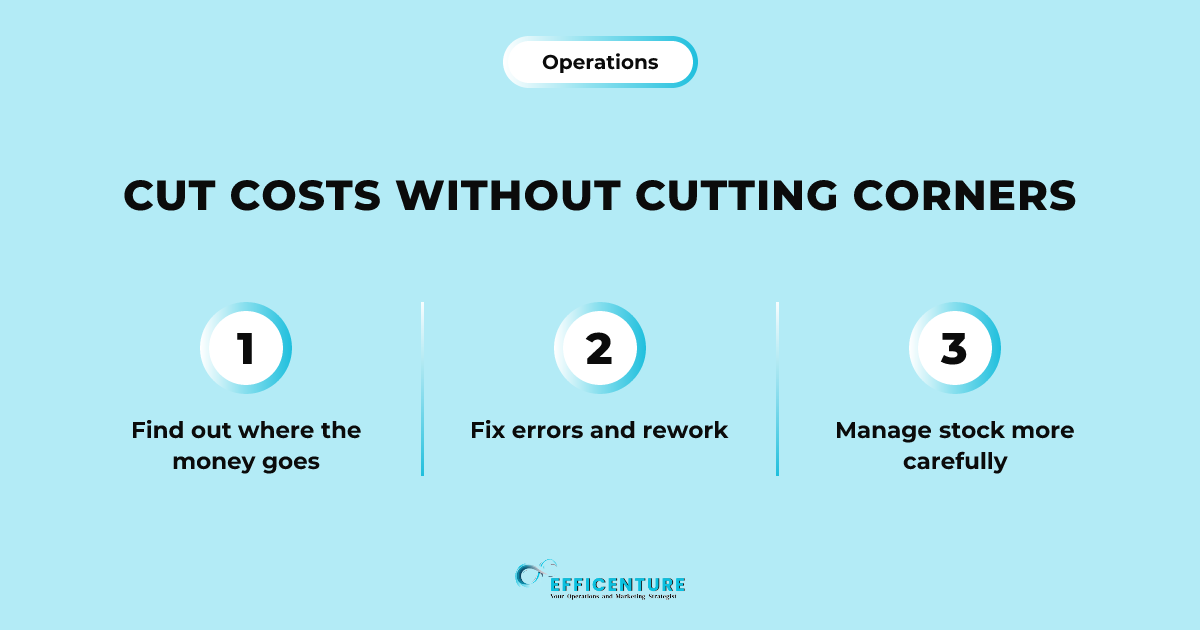
To reduce operating costs in a small business, first find out exactly where the money goes, then target waste rather than cutting across the board. The biggest savings usually come from fixing errors and rework, reducing stock that sits unsold, renegotiating with suppliers, using staff time better, cutting unused subscriptions and services, and stopping marketing spend that doesn't bring in customers. Track the effect of each change, so you keep what works and protect the things customers value.
Rising costs are a constant pressure for Kenyan businesses: rent, fuel, electricity, wages, taxes, statutory deductions and supplier prices. The instinct is often to cut wherever it's easiest. That can save money in the short term while damaging service, quality or staff morale, which costs more later.
Step 1: Find out where the money goes
You can't cut costs sensibly without a clear picture of them.
List every regular cost
Go through three to six months of bank statements, M-Pesa statements and receipts. List every recurring cost, grouped into categories:
- Rent and service charges
- Salaries, wages and statutory deductions
- Stock and raw materials
- Utilities: electricity, water, internet
- Transport and fuel
- Marketing and advertising
- Software, subscriptions and phone bundles
- Bank and M-Pesa transaction charges
- Professional services: accounting, legal, IT
- Repairs and maintenance
- Loan repayments and interest
Rank them by size
Most businesses find that a few categories make up most of their costs. Focus there first. Saving 10% on your largest cost often matters more than eliminating a dozen small ones.
Spot the surprises
Look for costs you didn't expect, ones that have grown fast, or ones you can't explain. These often point to waste.
Step 2: Fix errors and rework
Mistakes are one of the most expensive hidden costs. Every wrong order, missed delivery, incorrect invoice or job done twice costs money twice: once for the original work, again to fix it, and sometimes again in lost customers.
- Track errors for a month: what went wrong, how often and what it cost.
- Find the cause. Is it unclear instructions, poor handovers, missing information or lack of training?
- Fix the process, often with a simple checklist or standard operating procedure.
Reducing errors also improves customer satisfaction, so it saves money and protects revenue at the same time.
Step 3: Manage stock more carefully
For retailers, restaurants, pharmacies, hardware shops and manufacturers, stock ties up cash and can be lost to expiry, damage or theft.
- Know what sells. Review sales data to identify fast and slow movers.
- Reduce slow stock. Order less of items that sit for months, and clear old stock with promotions.
- Count regularly. Regular stock counts catch losses early.
- Set reorder levels for key items, so you don't over-order in a panic or run out.
- Track waste, especially for perishable goods.
Step 4: Renegotiate with suppliers
Many businesses accept the same supplier prices for years.
- Get competing quotes for your largest purchases at least once a year.
- Ask for better terms, such as volume discounts, longer payment periods or free delivery.
- Consolidate purchases with fewer suppliers to increase your buying power.
- Pay on time when it earns a discount, and ask whether early payment discounts are available.
- Review contracts for services such as security, cleaning, internet and insurance before they renew automatically.
Keep relationships good. A reliable supplier who delivers on time may be worth more than a cheaper one who doesn't.
Step 5: Use staff time better
Wages are often the largest cost, but cutting staff is rarely the best first step. It can overload remaining staff, hurt service and lose skills that are expensive to replace. Look at how time is used first.
- Map how time is spent. Ask staff to record their main tasks for a week. You'll often find hours lost to manual data entry, waiting for approvals, searching for information or fixing mistakes.
- Remove unnecessary steps. Some tasks exist only because "we've always done it this way".
- Match staffing to demand. Review busy and quiet periods and adjust shifts.
- Cross-train staff, so the team can cover absences without overtime or temporary hires.
- Delegate approvals. If everything waits for the owner, work slows and costs rise.
Step 6: Cut unused subscriptions and services
Small recurring costs add up. Review every software subscription, phone and data bundle, paid tool and service contract.
- Cancel anything nobody uses.
- Downgrade plans that are bigger than you need.
- Combine overlapping tools.
- Check that staff who've left no longer have paid accounts.
Step 7: Reduce utility and transport costs
- Electricity: switch to energy-efficient lighting and equipment, turn off machines when idle, and look at whether solar power makes financial sense for your premises.
- Transport: plan delivery routes to reduce distance, combine deliveries, and track fuel use by vehicle.
- Internet and phones: compare packages and remove lines or bundles you don't need.
Step 8: Review marketing spend
Marketing is often cut first in hard times, which can reduce revenue. Instead, cut what doesn't work and keep what does.
- Track enquiries and customers by channel.
- Stop or reduce spending on channels that don't produce customers.
- Move budget to channels with the lowest cost per new customer.
- Make better use of free channels, such as your Google Business Profile, reviews and referrals.
Step 9: Control payment and finance costs
- Check transaction charges. Review bank, card and M-Pesa charges, and choose the payment options that suit your volume.
- Collect payments on time. Late payments force you to borrow or delay your own payments. Clear invoicing and follow-up reduce this.
- Review loans. Expensive short-term borrowing can sometimes be refinanced on better terms.
- Avoid penalties. File and pay KRA obligations and statutory deductions on time to avoid fines and interest. A good accountant pays for themselves here.
Step 10: Track the results
For each change, note the expected saving and check the actual result after a month or two. Some changes save less than expected. Others have side effects, such as slower service or unhappy staff. Keep what works and reverse what doesn't.
A simple monthly cost report, comparing each category with the previous month and the same month last year, helps you catch costs creeping back up.
What might this look like in practice?
Here is an illustrative example. A restaurant in Nairobi sees costs rising faster than sales and reviews three months of spending.
- Food waste: staff record what's thrown away for two weeks. Over-preparation of a few dishes on quiet days is the main cause. The kitchen adjusts preparation by day of the week.
- Stock: some drinks and dry goods are ordered weekly out of habit and pile up in the store. The manager sets reorder levels and moves to ordering what's needed.
- Suppliers: the restaurant gets three quotes for vegetables and gas, and agrees better terms with its existing vegetable supplier in exchange for a longer commitment.
- Subscriptions: it finds two point-of-sale add-ons and a music service nobody uses.
- Marketing: boosted posts bring likes but few bookings, while its Google Business Profile brings most new customers. It stops boosting and puts the effort into photos, posts and reviews on its profile.
None of the changes affects the food, the service or the staff. Together, they reduce costs noticeably within a couple of months.
Quick wins checklist
If you want to start this week, work through this list:
- Cancel unused subscriptions and paid tools.
- Remove former staff from paid accounts.
- Get one competing quote for your largest supplier.
- Check this month's bank and M-Pesa charges.
- List overdue customer invoices and follow up.
- Switch off equipment and lights outside working hours.
- Pause any ad campaign that hasn't produced a customer in two months.
What not to cut
Some cuts save money now and cost much more later.
- Customer service quality. Losing customers is expensive.
- Key staff. Replacing skilled people costs time and money.
- Equipment maintenance. Skipped servicing leads to breakdowns and bigger repair bills.
- Marketing that works. Cutting your best channel cuts future revenue.
- Compliance. Fines and legal problems cost far more than doing things properly.
Involve your team
Staff often know where money is wasted long before managers do. Ask them directly, and reward practical ideas. People are also more likely to support cost changes they helped design.
How Efficenture can help
Efficenture works with small and growing businesses in Kenya to map processes, find waste and put practical cost controls in place without hurting service. Learn more about our operations management consulting, or see how our analytics and reporting shows which marketing spend pays off.
We're based in Nairobi and work with businesses across Kenya and East Africa. Book a consultation and we'll help you find where your costs can safely come down.
Frequently asked questions
What is the fastest way to reduce costs in a small business?
Start by cancelling unused subscriptions and services, renegotiating major supplier contracts and stopping marketing that doesn't bring in customers. Fixing errors and rework usually produces bigger savings but takes a little longer.
Should I cut staff to reduce costs?
Look at how staff time is used before cutting jobs. Removing unnecessary tasks, matching shifts to demand and reducing errors often saves more without losing skills or hurting service.
How do I find hidden costs in my business?
Review several months of bank and M-Pesa statements and list every recurring cost. Track errors, rework, stock losses and overtime for a month. These often reveal costs that don't show up as single line items.
Is it a good idea to cut marketing when money is tight?
Cut marketing that doesn't produce customers, but protect what does. Track enquiries and customers by channel so you know which spending to keep.
How often should I review business costs?
Review a cost summary monthly and do a full review of suppliers, contracts and subscriptions at least once a year.
Weekly Insights
One useful idea a week, on what you care about
A two-minute weekly briefing for growing businesses: the insight worth knowing on each topic you pick, why it matters, one thing to do that week, and the guides that go deeper. Unsubscribe any time.