How to Choose a Business Automation Agency for Growth
A business automation agency helps growing companies connect disconnected software, standardise workflows, and eliminate manual data entry. Here is how to evaluate and select the right partner.
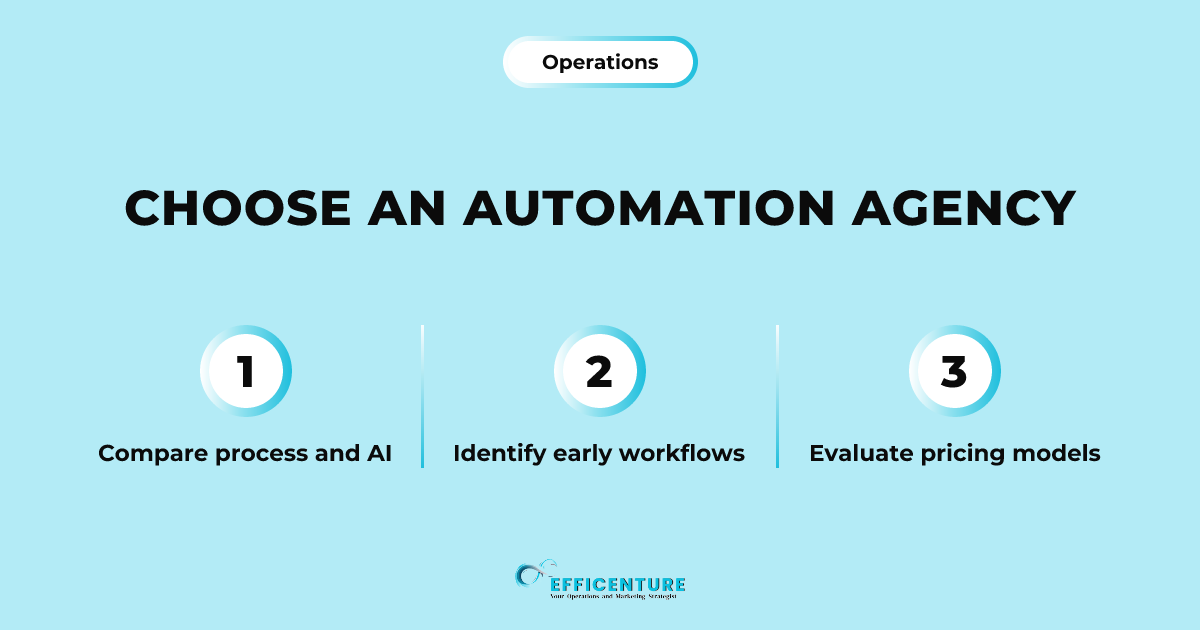
A business automation agency helps companies design, build, and maintain automated workflows that connect software tools and eliminate manual data entry. Rather than replacing your workforce, these specialists configure background systems so your team spends less time copying information between databases and more time serving clients.
Growing businesses often reach a point where software tools create more administrative friction than efficiency. Sales reps log deals in a custom customer relationship management tool, accounting runs on local software, and fulfillment updates live in separate spreadsheets. When these systems fail to communicate, staff waste hours retyping order details, updating stock counts, and following up on delayed approvals across branches in Mombasa, Nakuru, and Eldoret.
Working with an external automation partner allows you to standardise these operational paths before locking them into software. To build a system that lasts, you need a firm grasp of what an automation partner delivers, how to structure your internal processes first, and how to evaluate prospective technical partners. For broader context on structuring your systems, read our companion guide on business automation in Kenya.
What does a business automation agency do?
A business automation agency analyses internal operating procedures, identifies repetitive manual tasks, and builds automated data flows across your software applications. Their core job is to eliminate data silos so information moves automatically from customer touchpoints through to internal fulfillment and financial reporting.
+-------------------------------------------------------------------+
| BUSINESS AUTOMATION AGENCY |
| |
| 1. Audit & Process Mapping |
| - Document manual handoffs across sales, finance & ops |
| |
| 2. System Architecture & Integration |
| - Connect software via APIs, webhooks, and middleware |
| |
| 3. Workflow Engineering |
| - Build conditional logic, approval paths & data validation |
| |
| 4. Testing, Governance & Maintenance |
| - Implement error logging, fallback alerts & security rules |
+-------------------------------------------------------------------+
Instead of simply selling software subscriptions, an automation partner acts as an operational architect. They evaluate how work moves through your business, highlight process bottlenecks, and choose the right tools to connect your existing technology stack.
Workflow analysis and architecture
Before writing code or setting up automation recipes, an agency maps your current state. They examine how leads turn into orders, how orders trigger invoices, and how inventory levels update across warehouses. This exercise reveals hidden delays, redundant data entries, and points of failure where human error frequently occurs.
Technical integration and middleware configuration
Most modern software applications communicate using Application Programming Interfaces (APIs). An automation agency configures these connections using integration platforms such as Make, Zapier, or custom code environments like Python and Node.js. They connect payment options like M-Pesa, specialized accounting systems like eTIMS-compliant invoicing software, and inventory databases into unified workflows.
Human-in-the-loop logic and governance
Not every decision can or should be automated. Experienced agencies design human-in-the-loop systems that route complex requests, high-value contracts, or unusual transactions to a manager for manual approval before the workflow resumes. They also build error handling rules so that if an API connection fails, your operations team receives an immediate notification rather than letting the order drop quietly.
To understand how to prepare your internal team for these process adjustments, see our guide on business process improvement.
Process automation versus AI automation
Process automation follows fixed rules to move data between systems, whereas AI automation uses probabilistic models to handle unstructured information like emails, audio, or messy documents. Understanding this distinction prevents businesses from purchasing complex artificial intelligence solutions when simple rule-based connections are all that is required.
Deterministic process automation relies on strict logic, meaning that if trigger A happens, the system executes action B. For example, when a client pays an invoice through an online link, the system creates a tax receipt, updates the ledger, and sends a delivery notification. This framework is predictable, highly secure, and easy to test.
AI automation introduces cognitive capabilities. Generative models and natural language processing can extract fields from a scanned paper purchase order, categorise customer inquiries by sentiment, or draft initial email responses. However, AI engines can occasionally generate incorrect outputs, making human review essential.
| Feature | Process Automation | AI Automation |
| :--- | :--- | :--- |
| Logic Type | Rule-based (If X, then Y) | Probabilistic (Pattern recognition) |
| Data Handled | Structured data (Forms, databases, APIs)| Unstructured data (Emails, PDFs, voice) |
| Predictability | 100% deterministic | Variable (Requires guardrails) |
| Best Used For | Finance, CRM sync, inventory updates | Lead triage, document parsing, support |
Building automated workflows around inefficient procedures only accelerates confusion. If your underlying business operations lack clear guidelines, layering AI algorithms on top will amplify errors. Engaging an operations management consulting specialist helps resolve underlying operational bottlenecks before software configuration begins.
When to hire an automation agency
A business should hire an automation agency when operational growth outpaces administrative capacity, resulting in delayed customer service, data inaccuracies, and staff burnout. Bringing in external experts is usually more efficient than expecting internal managers to learn software integration while handling daily work.
Here are five clear operational indicators that your enterprise is ready for an external automation partner:
- High error rates in data re-entry: Staff spend hours copying records between customer management platforms, billing tools, and logistics portals, causing frequent typos and missing orders.
- Delayed response times: Leads generated from marketing campaigns sit in an inbox for hours before a sales representative contacts them, leading to missed deals.
- Lack of operational visibility: Leadership cannot pull accurate revenue or delivery reports without waiting several days for staff to clean manual spreadsheets.
- Disconnected branch operations: Regional teams in Nakuru, Kisumu, or Eldoret run independent spreadsheets, preventing central oversight of company performance.
- Key person dependency: Critical processes depend entirely on specific staff members manually approving, sending, or checking spreadsheets every week.
If your organisation experiences these issues across daily operations, evaluate your current digital setup with a free marketing and operations audit.
Which business workflows to automate first
The best workflows to automate first are high-volume, repetitive tasks that use structured data and require minimal human intervention. Focusing initial efforts on core revenue and fulfillment cycles delivers immediate time savings and demonstrates clear return on investment to leadership.
RECOMMENDED AUTOMATION ROADMAP
Phase 1: High-Volume / Low-Risk --> Phase 2: Revenue Operations
+---------------------------------+ +---------------------------------+
| - New lead CRM routing | | - Automated quote generation |
| - Invoice notification emails | | - Mobile payment reconciliation |
| - Standard form submission logs | | - Contract generation templates |
+---------------------------------+ +---------------------------------+
|
v
Phase 4: Advanced AI Logic <-- Phase 3: Operations & Delivery
+---------------------------------+ +---------------------------------+
| - Customer inquiry triage | | - Automated project creation |
| - PDF invoice data extraction | | - Inventory reorder alerts |
| - Intelligent support routing | | - Cross-departmental task logs |
+---------------------------------+ +---------------------------------+
1. Revenue and lead operations
When a prospective buyer fills out a query form on your website or social channel, an automated sequence should log their details in your primary CRM, score the prospect based on budget or location, and assign the lead to an account manager. Automating this handoff ensures instant follow-ups while data is fresh. You can read more about setting up automated customer messaging on our email marketing and automation service page.
2. Finance and billing workflows
Reconciling payments across multiple channels creates significant operational drag. Automated financial workflows can read incoming mobile money payment confirmations, match transaction reference numbers against pending invoices, update accounting ledgers, and trigger eTIMS-compliant digital receipts without manual oversight.
3. Service delivery and client onboarding
Once a customer signs an agreement or pays a deposit, an automated trigger can create a new project workspace, generate standardised task lists, invite team members, and send a welcome kit to the client. This guarantees a consistent client experience regardless of who handles the account.
4. Inventory and supply chain management
For businesses with distribution networks spanning multiple towns, manual stock checks lead to stockouts and lost revenue. Automated inventory alerts can monitor stock levels in central databases, calculate reorder thresholds, and notify procurement managers when supplies run low in regional distribution hubs.
Before setting up complex integration scripts, document your exact business requirements. For step-by-step guidance on standardising operational steps, consult our detailed walkthrough on writing standard operating procedures.
How much a business automation agency costs in Kenya
Business automation services in Kenya typically vary by provider and scope; check current rates directly with local agencies. Total investment depends on process complexity, custom API development, software licensing fees, and ongoing system governance requirements.
+-----------------------------------------------------------------------+
| TYPICAL AUTOMATION AGENCY PRICING (KES) |
+--------------------------+---------------------+----------------------+
| Service Scope | Cost Range (KES) | Best Suited For |
+--------------------------+---------------------+----------------------+
| Discovery & Audit | 80,000 - 200,000 | Mapping processes |
| Single Workflow Setup | 150,000 - 350,000 | CRM or Billing sync |
| Multi-System Integration | 400,000 - 800,000+ | Full Ops & ERP sync |
| Monthly Maintenance | 50,000 - 180,000/mo | System updates & ops |
+--------------------------+---------------------+----------------------+
Agency pricing generally falls into three main structures:
Project-based scoping and implementation
Most engagements start with an operational audit and setup phase. A simple project linking a lead capture page to a sales portal and notification channel typically costs between KES 150,000 and KES 350,000. Comprehensive projects involving deep custom API coding, database cleaning, and cross-departmental automation range from KES 400,000 to KES 800,000 or more.
Monthly retainers and support
Software platforms update their APIs frequently, and business workflows change as organisations scale. Retainer plans generally range from KES 50,000 to KES 180,000 per month. This covers workflow maintenance, system monitoring, performance optimisation, and adjusting logic as operational needs shift.
Software licensing and middleware costs
In addition to agency service fees, businesses must budget for middleware platforms like Make or Zapier, server usage, and software subscriptions. These third-party costs vary widely based on operations volume, typically adding between KES 10,000 and KES 60,000 monthly to your overall technology expense.
To evaluate how automated tracking improves your wider operational performance, explore our analytics and reporting services.
How to choose the right business automation agency
To choose the right business automation agency, prioritise firms that emphasise operational discovery and business process mapping over software implementation. Selecting a partner based solely on technical hype risks buying complex software tools that fail to align with how your team works.
Use this checklist during your agency selection process:
- Operational understanding: Does the team ask detailed questions about your fulfillment steps, team handoffs, and business edge cases, or do they immediately jump to software features?
- Documentation standards: Will the agency provide clear workflow diagrams, standard operating procedures, and administrative documentation so your business owns its system architecture?
- Error handling and fallback design: How does the agency manage API failures, system downtime, or unexpected data inputs to prevent business interruptions?
- Data privacy and compliance: Does the agency follow strict security protocols when handling sensitive financial records, customer databases, and employee records?
- Change management support: Does the engagement plan include training sessions for your administrative team to ensure smooth adoption of new procedures?
Be cautious of agencies offering fixed AI packages without evaluating your business operations first. Automation should solve established operational problems, not introduce unnecessary technical debt. For more insights on choosing technical partners, read our guide on selecting an operations management consultant.
Taking the next step in your business operations
Automating your business operations allows your team to focus on strategic execution, customer retention, and sustainable expansion. By mapping core procedures, choosing practical integration tools, and building clear logic paths, you can scale operations efficiently without bloating administrative expenses.
At Efficenture, based in Nairobi, we help organisations across Kenya and East Africa align their business operations, eliminate redundant manual tasks, and build scalable technology architecture. Whether you need to connect legacy billing platforms with cloud software or overhaul your customer fulfillment workflows, our consultants bring practical operational experience to your leadership team.
Explore our dedicated operations management consulting service to see how we can help upgrade your business infrastructure, or call or WhatsApp us today on +254 714 146 122 to schedule an initial operations review.
Frequently asked questions
What is a business automation agency?
A business automation agency is a specialised consulting firm that designs, connects, and maintains software integrations to eliminate manual data entry in business workflows. They help companies connect disparate software systems like CRMs, ERPs, accounting tools, and communication channels.
How much does a business automation agency cost in Kenya?
Business automation services typically vary by provider and scope; check current rates directly with local agencies. Ongoing maintenance retainers usually vary by provider and scope; check current rates directly with local agencies.
What is the difference between business process automation and AI automation?
Business process automation follows strict, deterministic rules to move structured data between software systems, such as creating an invoice upon payment. AI automation uses statistical machine learning models to interpret unstructured data, such as categorising emails or extracting information from scanned paper documents.
How long does it take to implement a business automation project?
A simple single-department automation project can be configured and deployed within 2 to 4 weeks. Multi-department enterprise integrations that require operational restructuring, custom API development, and user testing typically take 8 to 12 weeks to launch safely.
Weekly Insights
One useful idea a week, on what you care about
A two-minute weekly briefing for growing businesses: the insight worth knowing on each topic you pick, why it matters, one thing to do that week, and the guides that go deeper. Unsubscribe any time.