Market Analysis for Small Businesses in Kenya
Discover how to run a practical market analysis for your small business using everyday operational data and local insights.
Market analysis for small businesses means examining customer demand, competitor behaviour, and industry conditions to guide your next commercial step. Many business owners treat this task as an academic exercise that requires expensive third-party reports. Instead, you can build a reliable market picture using data already passing through your business every day.
When you connect market demand to your internal workflow, you avoid the trap of stocking products nobody wants or spending on ads that miss the mark. You can also explore how to scale a small business in Kenya to see how growth planning links to daily output. This operational approach turns market analysis from a theoretical report into a practical tool for daily decision-making.
If you run a boutique on Kimathi Street or a spare parts shop in Industrial Area, you know how tight margins can be. Waiting for a massive agency to hand over a glossy PDF does not help you pay rent at the end of the month. You need numbers you can trust right now.
What Market Analysis Means for Small Businesses
Market analysis is the process of gathering and reviewing facts about your target buyers, pricing limits, and rival firms in your sector. For a small retail shop in Westlands or a hardware store in Nakuru, this means knowing who buys your stock, what they pay elsewhere, and why they choose you. It stops you from guessing about expansion plans and gives you figures to back up your budget.
If your marketing messages fail to convert, a weak understanding of the local buyer is often the root cause. You can check your current setup with a free marketing audit to spot where your offers disconnect from audience needs. Clear market facts show you where your product fits and what price the market will actually bear in Kenya shillings.
Many owners skip this step because they think it belongs in a business school textbook. In reality, it just means talking to your customers and looking at your till receipts with a critical eye. When you know your exact numbers, you stop stocking dead inventory that ties up your working capital.
How to Review Internal Sales Data First
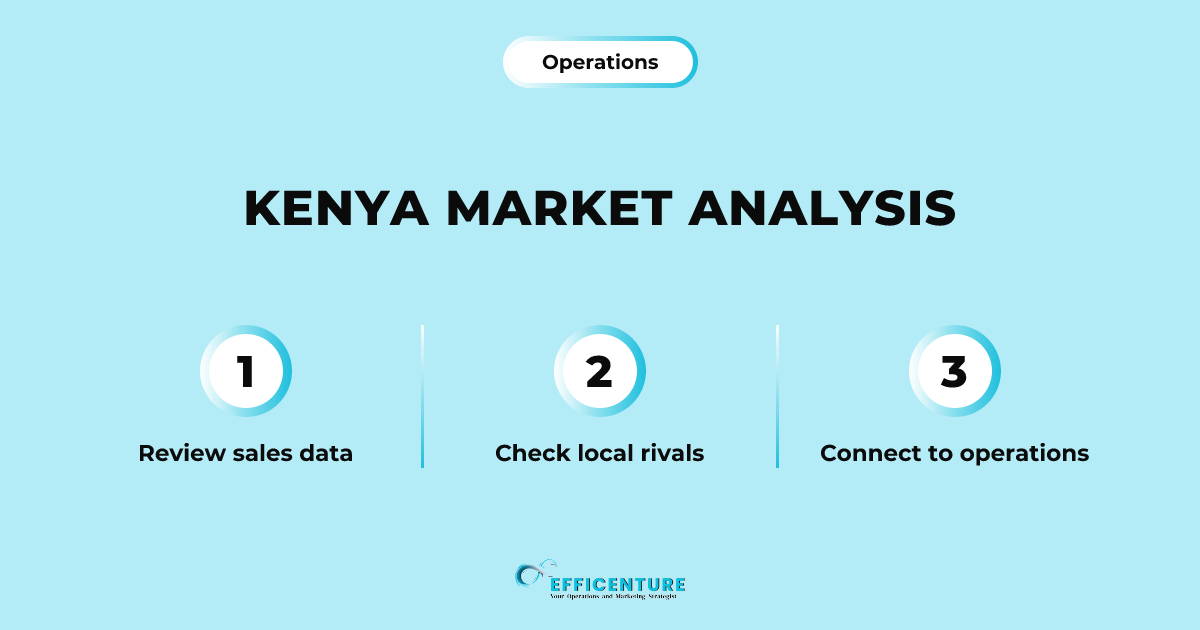
Your internal sales records offer the most accurate market analysis data available because they reflect real money paid by real customers. Before you look at external reports, review your point-of-sale logs, M-Pesa statements, and ledger books to find your strongest patterns. This internal review forms the base of our operations management consulting service for growing firms.
Identify Your Highest Margin Products
Look at your sales ledgers to find which items or services bring in the most gross profit after direct costs. Do not just look at total revenue, as a high-volume product with tiny margins can drain your stockroom and cash flow.
For instance, selling cement might bring in heavy daily cash, but if the transport costs leave you with fifty shillings per bag, you are working for the transporter instead of yourself. Calculate your exact costs per unit before you decide which products deserve prime shelf space.
Track Customer Purchase Frequency
Check how often repeat buyers return to your business for another transaction. If customers buy once and never return, your market analysis must focus on why retention is low.
If you run a hardware shop, look at whether contractors come back for their second and third sites or if they vanish after the first visit. A simple follow-up text message or a loyalty note can tell you why they walked away.
Map Geographic Buying Patterns
Sort your sales by delivery address or customer phone prefix to see where your buyers actually live. You might find that half your orders come from specific estates, which changes where you should focus your delivery logistics.
If most of your online orders head to Kilimani and Lavington, parking your boda boda rider in CBD makes less sense than basing them near Adams Arcade. Let your delivery data dictate your physical positioning.
How to Check Local Competitors Practically
Competitor analysis involves finding out who else serves your target audience and what prices they charge for similar goods. You do not need industrial espionage for this step; standard customer behaviour gives you all the answers you need. You can read more about balancing these external realities with internal costs in how to reduce operational costs in a small business in Kenya.
Mystery Shopping Your Rivals
Call competing businesses or visit their physical premises to ask about their prices, delivery times, and payment terms. Note down what they do well and where their service falls short, as those gaps represent your primary market opportunity.
If the shop down the road takes three days to deliver bulky goods, you can win orders simply by promising same-day delivery via an independent truck. Small operational edges beat massive marketing budgets every time.
Reviewing Public Feedback Online
Read customer reviews on Google Maps, social media pages, and local directory listings for businesses in your industry. Complaints about slow delivery or rude staff tell you exactly what local buyers value and where competitors are vulnerable.
Look at what people complain about on Twitter when they mention local hardware stores or clothing shops. Those complaints are a map of unsatisfied demand waiting for your better service.
Analysing Competitor Marketing Channels
Observe where your rivals spend their advertising budget, whether on billboards along Mombasa Road, sponsored posts on Instagram, or flyers in residential mailboxes. This shows you where your target audience spends attention and which channels generate active commercial interest.
If your main rival posts daily TikTok videos showing how their furniture is assembled, and customers flood the comments with price questions, you know your own business needs a similar video presence. Copy what works and improve where they fail.
How to Connect Market Findings to Operations
Market analysis fails when the insights stay in a notebook and never change how your business operates day to day. You must translate what you learn about buyers and rivals into practical adjustments inside your workflow. Read about the hidden cost of the gap between marketing and operations to understand why this alignment protects your profit margins.
Adjusting Stock Levels Based on Demand
If your market review shows rising demand for a specific item, update your inventory purchasing rules immediately to avoid stockouts. Tie your reorder points directly to the sales velocity trends you uncovered during your data review.
Do not wait until your shelves are entirely bare to call your supplier in Industrial Area or Gikomba. Set an alarm on your phone for when stock hits twenty percent so you can reorder without panic.
Refining Staff Rosters for Peak Hours
Use your customer footfall and inquiry timing data to schedule staff shifts when demand is highest. If most inquiries arrive via WhatsApp on Saturday mornings, ensure a sales representative is logged in and ready to respond.
Many small businesses lose sales simply because nobody picks up the phone or replies to messages on a busy Saturday afternoon. Match your labour costs directly to when the money actually tries to walk through your door.
Updating Standard Operating Procedures
Write down the new pricing or service rules you adopted as a result of your market findings. Clear documentation helps your team maintain consistency as you adapt to market shifts. You can learn more about this in how to write SOPs for a small business in Kenya.
When you change your prices based on competitor audits, update your Till number prompts and price tags on the same day. Leaving old prices on display invites arguments at the counter and frustrates your cashiers.
How Often Should You Update Your Market Analysis?
You should review your market analysis figures every quarter to catch shifts in supplier costs, competitor pricing, and buyer preferences. Annual reviews leave your business too vulnerable to rapid economic changes and shifting import duties. Set aside a specific afternoon each month to check your sales mix against local market conditions.
Quarterly Price and Margin Checks
Compare your current cost of goods sold against supplier price changes every three months. Adjust your retail prices promptly if inflation or currency fluctuations squeeze your profit margins.
If your supplier raises the price of imported fittings by ten percent, waiting six months to pass that cost on to the buyer will destroy your cash reserve. Protect your business by moving in step with your suppliers.
Annual Competitor Audit
Run a full check of your top five competitors once a year to see if new entrants have changed the pricing structure. Update your competitor matrix with their current offers and delivery capabilities.
Markets move fast, and a business that looked weak twelve months ago might have secured new backing and undercut your prices. Regular checks stop you from getting caught off guard by a new market leader.
Ongoing Customer Feedback Loops
Collect informal feedback from buyers at the point of sale every single week. Train your front-line team to ask simple questions about what customers like and what they wish you stocked.
When a customer pays via M-Pesa, take two seconds to ask if they found everything they needed. That casual chat often reveals a product line you should add next month.
Work With Efficenture
If you want help turning market data into practical operational improvements, we are ready to assist you. Efficenture is an operations and digital marketing consultancy based in Nairobi, Kenya, helping local businesses build profitable systems. Reach out to discuss our operations management consulting services by calling or messaging us on WhatsApp at +254 714 146 122.
Frequently asked questions
What is the main purpose of a market analysis for a small business?
A market analysis helps you understand customer demand, pricing limits, and competitor behaviour so you can make informed decisions about your inventory, pricing, and operations.
How can small businesses in Kenya gather data without a large budget?
You can gather reliable data by reviewing your own internal sales records, M-Pesa logs, and point-of-sale data, alongside observing competitor prices and customer reviews online.
How often should a small business update its market analysis?
You should review your market data every quarter to catch shifts in supplier costs, competitor pricing, and buyer preferences before they hurt your profit margins.
Why is internal sales data important for market analysis?
Internal sales records reflect real money paid by actual customers, giving you accurate baseline figures on your strongest products, profit margins, and repeat buyer rates.
Weekly Insights
One useful idea a week, on what you care about
A two-minute weekly briefing for growing businesses: the insight worth knowing on each topic you pick, why it matters, one thing to do that week, and the guides that go deeper. Unsubscribe any time.