Sales Pipeline Strategy: Operational Guide for Growth
A sales pipeline strategy connects lead intake to operational delivery, preventing deal bottlenecks and turning commercial activity into predictable revenue.
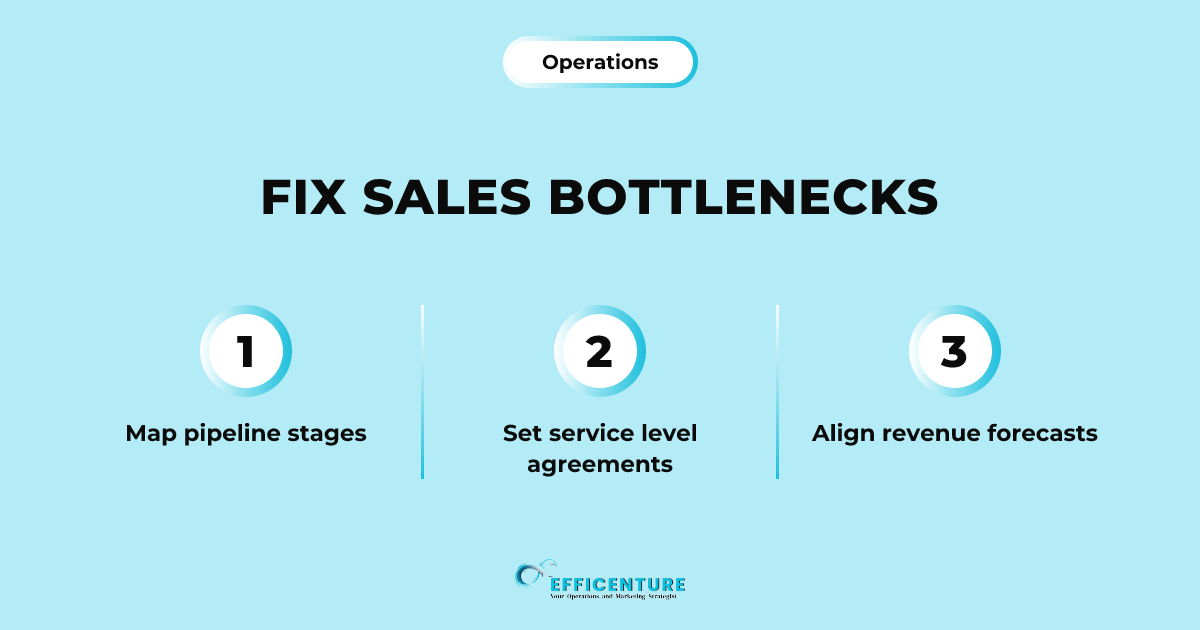
A sales pipeline strategy is an operational blueprint that tracks, manages, and moves prospective buyers through structured stages of your commercial process. It connects initial marketing interest to final contract delivery, ensuring your team converts inquiries into revenue without creating operational bottlenecks.
Building a pipeline is not simply buying CRM software or telling reps to make more calls. If your sales team promises timelines your fulfillment team cannot meet, deals stall, costs rise, and revenue becomes erratic. We explore how to align your commercial activity with your operational infrastructure through our operations management consulting work across East Africa.
Here is how to design, execute, and govern a sales pipeline strategy that drives predictable business growth.
What is an operational sales pipeline strategy?
An operational sales pipeline strategy is a system of defined stages, strict qualification rules, and execution handoffs that turns prospective buyers into paying clients. It tracks the physical progress of deals while allocating operational resources to fulfill those commitments on time and on budget.
Many business leaders confuse a sales funnel with a sales pipeline. A funnel represents the buyer journey from awareness to purchase, focusing on conversion percentages across broad audiences. A sales pipeline represents your internal actions, tracking specific deals and the concrete steps your team must execute to close them. We have outlined how lead intake feeds into this process in our guide to the lead generation process.
When you build a pipeline strategy around operational reality, you move away from emotional revenue guessing. Instead of relying on optimistic seller estimates, your pipeline reflects verified actions, such as completed technical site visits, approved commercial proposals, validated credit checks, and signed contracts.
Treating the pipeline as an operational process changes how your business grows. It prevents your sales representatives from discounting prices just to hit monthly targets, and it prevents your delivery teams from getting overwhelmed by unvetted custom requests.
How do you map sales pipeline stages to operational capacity?
You map sales pipeline stages by establishing clear, non-negotiable exit criteria for every phase of the deal. Every stage must require verified proof before a deal moves forward, preventing bloated pipelines filled with inactive leads.
A standard operational sales pipeline consists of six core stages:
1. Lead intake and triage
Every incoming query from website forms, WhatsApp, trade shows, or phone calls enters a central repository. The objective at this stage is basic verification, which means confirming contact details, confirming the prospect operates in your target market, and checking for immediate operational showstoppers.
2. Operational qualification
Qualification must evaluate both buyer interest and operational fit. A prospect might have the budget to buy your commercial solar units in Eldoret or freight services in Mombasa, but if their delivery timeline requires custom components you do not stock, moving them deeper into your pipeline wastes engineering and account management hours.
3. Technical scoping and solution design
Before issuing a financial proposal, your team assesses the exact requirements of the deal. This may involve site audits, software specifications, or service level agreement draft reviews. If a deal requires bespoke adjustments, operational leads must sign off on feasibility and margins before a rep submits a figure.
4. Commercial proposal and compliance review
The proposal presents your final scope, pricing structure, payment terms, and delivery schedules. In East African business contexts, this stage includes verifying compliance requirements such as eTIMS tax invoice readiness, regulatory licenses, or vendor registration documents.
5. Contract negotiation and commitment
The buyer reviews terms, requests adjustments, and executes legal contracts. Stage exit occurs only when a signed agreement and any required advance deposits, such as a project commitment fee via bank transfer or M-Pesa business paybill, are received and confirmed by finance.
6. Operational handoff and onboarding
The deal converts from a sales opportunity into an active client project. The pipeline stage officially ends when account ownership transfers smoothly to operational project managers, supported by detailed kick-off documentation.
What operational bottlenecks destroy sales pipeline velocity?
Sales pipeline velocity measures how fast a lead moves from initial inquiry to signed contract. Operational bottlenecks destroy velocity by introducing friction, delays, and administrative backlogs between stages.
To evaluate where your current sales and operational handoffs are stalling deals, you can complete our free marketing audit to identify gaps between client acquisition and internal execution.
The four most common operational pipeline bottlenecks include:
- Slow quote generation: When sales reps must wait three days for technical estimates or inventory checks from operations, prospective buyers lose momentum or seek competing offers.
- Custom pricing approvals: Undefined discounting policies force reps to seek management approval for minor price adjustments, stalling deals at the proposal stage for weeks.
- Manual compliance and credit checks: Delaying tax checks, credit assessments, or contract reviews until the end of the deal cycle causes late-stage drop-offs.
- Fulfillment capacity limits: If your delivery team is running at 100% capacity, sales reps hesitate to close new accounts, subconsciously slowing down negotiations because they know onboarding will fail.
Fixing these bottlenecks requires standardizing your internal workflows. You can review practical examples of standardizing backend processes in our guide on how to write SOPs for a small business in Kenya.
How do you set service level agreements between sales and operations?
You set service level agreements by creating binding response times and task ownership rules between your commercial team and your operational delivery teams. Service level agreements eliminate internal friction by clarifying who does what, by when.
Without internal agreements, sales teams blame operations for slow delivery, while operations teams accuse sales reps of bringing in poor-quality deals with unrealistic deadlines.
| Pipeline Stage Handoff | Responsible Team | Operational SLA Commitment | Target Outcome |
| :--- | :--- | :--- | :--- |
| Inbound Lead Triage | Sales Operations | Contact lead within 2 business hours | Initial qualification call scheduled |
| Technical Scoping | Field Operations / Technical | Complete site audit within 48 hours | Scope requirement document delivered |
| Proposal Review | Finance & Legal | Review custom terms within 24 hours | Approved commercial proposal released |
| Contract Execution | Operations & Onboarding | Complete kick-off within 3 business days | Delivery schedule agreed with client |
Enforcing these agreements requires clear escalation pathways. If a technical quote is not returned within 48 hours, the system should automatically notify the operations manager to reassign resources or address the delay.
Which metrics track sales pipeline health and operational capacity?
Tracking sales pipeline health requires measuring process efficiency and resource consumption, not just total potential deal value. Relying solely on pipeline value creates false optimism if those deals take six months to close or yield low profit margins.
Tracking these five metrics through your business system or tailored analytics and reporting setup provides a clear view of your operational pipeline performance:
Pipeline velocity
Calculates how much revenue moves through your pipeline every day.
Pipeline Velocity = (Number of Qualified Opportunities x Average Deal Value x Win Rate) / Sales Cycle Length (in Days)
If you have 20 active opportunities worth KES 500,000 each, a win rate of 25%, and an average sales cycle of 50 days, your pipeline velocity is KES 50,000 per day. Shrinking the cycle from 50 to 35 days through faster quote turnaround increases daily velocity without spending extra money on marketing.
Stage conversion rate
Measures the percentage of opportunities that advance from one specific stage to the next. A steep drop between qualification and technical scoping indicates that sales reps are qualifying bad-fit leads, wasting operational time on site visits that go nowhere.
Sales cycle length by product or service line
Tracks how long deals take to close based on complexity. Standardized packages, such as monthly logistics retainers in Nakuru, should have a significantly shorter cycle than custom software deployment projects across regional offices.
Deal slippage rate
Measures the percentage of deals that fail to close within their original target close date. High slippage rates indicate poor sales qualification or internal operational delays during contract drafting and scope negotiation.
Sales-to-delivery backlog ratio
Compares total value of closed-won deals awaiting implementation against your operational capacity. A high ratio signals an imminent fulfillment bottleneck, while a low ratio indicates that your pipeline is running dry and your delivery teams will soon sit idle.
How do you select tools and governance for sales pipeline strategy?
Pipeline governance is the disciplined routine of reviewing deal progress, maintaining data accuracy, and auditing handoffs every week. The best software tool cannot fix a broken pipeline strategy if your team fails to enforce daily updates.
Select your tech stack based on system integration and field accessibility rather than feature lists:
Centralized CRM infrastructure
Choose a customer relationship management platform that your team will actually update. Field reps working across East Africa need fast mobile access to log notes, upload site photos, and confirm M-Pesa deposit receipts while away from office desks.
Automated stage rules
Configure your system to block deals from moving to the proposal stage unless required operational fields are filled. For instance, a rep cannot generate a proposal without specifying project location, implementation timeline, and payment terms.
Weekly pipeline operational reviews
Hold a mandatory 30-minute weekly meeting between sales leaders and operations managers. Focus exclusively on three areas, which are deals stuck in the same stage longer than agreed thresholds, upcoming resource requirements for deals in the 80% probability stage or higher, and feedback from delivery teams regarding lead quality issues from recent accounts.
Integrating your system with accounting platforms, credit check databases, and project management tools eliminates manual data entry and provides an accurate view of operational capacity. You can read more about selecting right-sized digital infrastructures in our guide on B2B lead generation.
How do you align revenue forecasts with working capital and inventory?
Aligning revenue forecasts with operational capacity prevents cash flow crunches caused by sudden growth spikes. Winning ten major corporate clients in a single month looks like success, but if those contracts require purchasing equipment upfront while clients hold 60-day payment terms, your business risks running out of working capital.
To maintain cash balance while expanding your pipeline, follow these practices:
- Tie stage probability to procurement lead times: If imported raw materials take six weeks to arrive in Mombasa, your procurement team must receive purchase signals when deals reach the 75% commitment stage, rather than waiting for signed contracts.
- Enforce minimum upfront terms: Mandate standard commercial terms, such as 30% upon contract signing, 50% upon delivery, and 20% upon completion. This ensures cash inflow funds fulfillment costs without drawing on working capital lines.
- Adjust pipeline capacity targets dynamically: If your operational team is at maximum capacity, increase your lead qualification threshold. Focus your commercial efforts strictly on higher-margin, low-complexity deals until delivery capacity rebalances.
When your sales strategy respects operational boundaries, deal flow creates cash stability instead of operational chaos. For businesses setting up structured client acquisition campaigns alongside operational improvements, our team provides managed lead generation services aligned with your target market.
Frequently asked questions
What is the main difference between a sales funnel and a sales pipeline?
A sales funnel tracks the buyer journey and broad conversion percentages across an audience, whereas a sales pipeline tracks your internal actions and the specific steps required to close individual deals.
Why do operational bottlenecks ruin sales velocity?
Bottlenecks introduce administrative delays and friction between stages, causing prospective buyers to lose momentum or look for alternative suppliers.
How can I prevent my delivery team from getting overwhelmed by new sales?
You can prevent this by setting up strict operational qualification criteria, defining service level agreements between sales and delivery, and adjusting your pipeline targets when capacity is full.
Weekly Insights
One useful idea a week, on what you care about
A two-minute weekly briefing for growing businesses: the insight worth knowing on each topic you pick, why it matters, one thing to do that week, and the guides that go deeper. Unsubscribe any time.