Ads ·
How Law Firms in Kenya Can Get Clients Online
People search online for legal help every day. Here is how a Kenyan law firm can be found, trusted and contacted, while staying within the profession's rules.
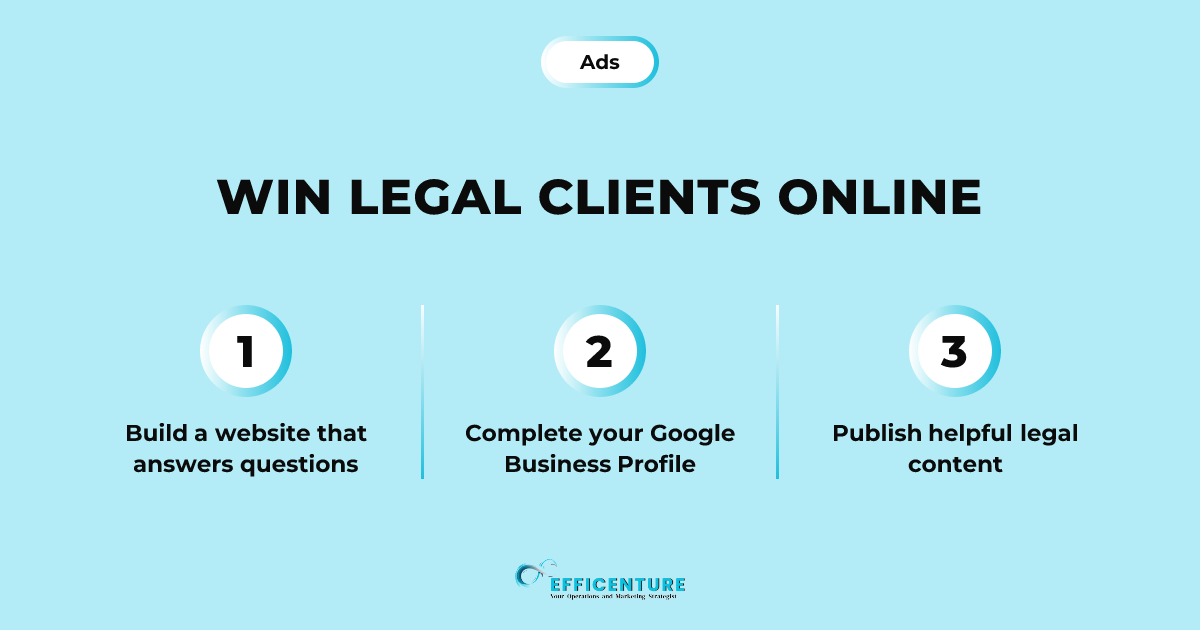
Law firms in Kenya get clients online by being easy to find when people search for legal help, and easy to trust once they find the firm. In practice that means a clear website with a page for each practice area, a complete Google Business Profile, helpful articles that answer common legal questions, focused Google Search Ads, a professional presence on LinkedIn, and a fast, careful process for handling enquiries. All of it must stay within the Advocates (Marketing and Advertising) Rules, 2014, which require marketing to be objective, true and dignified.
Most people with a legal problem now start online. They search "succession lawyer Nairobi", "how to transfer land in Kenya" or "unfair dismissal what to do". Firms that appear with clear, factual information, and respond quickly, win a large share of those enquiries.
This is general guidance, not legal advice on professional conduct. Check the Rules and any Law Society of Kenya guidance for your situation.
Step 1: Build a website that answers questions
The website is the base of everything else. A good law firm website:
- Has a page for each practice area, explaining what it covers, the typical process and timelines, and what documents clients need.
- Introduces the advocates, with names, qualifications and areas of focus.
- Shows the office location and hours, with a map and directions.
- Makes contact easy: phone, WhatsApp, email and a short consultation request form.
- Explains consultation fees or how they're handled.
- Loads fast on mobile, since most visitors will be on phones.
- Has a privacy notice explaining how enquiry data is handled.
Keep all content factual. No superlatives, testimonials, client names, case results or comparisons.
Step 2: Complete your Google Business Profile
When people search "lawyer near me" or "advocates Westlands", Google often shows a map with local firms. Your Google Business Profile decides whether you appear.
- Verify the profile and use the firm's real name.
- Choose accurate categories, such as "Law firm" or a more specific practice category.
- Add office hours, phone number, website and photos of the office and team.
- List your practice areas as services.
- Keep details consistent with your website and directories.
Reviews are a sensitive area for advocates. Seek guidance on how the Rules apply before actively asking clients for reviews.
Step 3: Publish helpful legal content
Educational articles are one of the most effective and dignified ways for law firms to be found. They answer the questions people search for and show the firm's expertise without making claims.
Good topics include:
- Step-by-step guides, such as how succession works in Kenya or how to register a company
- Explanations of documents, costs and timelines for common matters
- What new laws or court decisions mean for businesses and individuals
- Frequently asked questions in each practice area
Each article should be accurate, dated, reviewed by an advocate, and note that it's general information rather than advice on a specific matter. Link articles to the relevant practice area page.
Step 4: Improve search visibility
Search engine optimisation helps your pages appear for relevant searches.
- Target specific searches: "conveyancing advocate Kiambu" is more useful than "lawyer Kenya".
- Write clear page titles and headings that match how people search.
- Link related pages together, such as articles to practice pages.
- Get listed in reputable legal and business directories with consistent details.
- Earn mentions through speaking, writing for publications and professional associations.
- Fix technical problems such as slow pages and broken links.
SEO takes months, but it builds visibility that lasts.
Step 5: Use focused search ads
Google Search Ads bring enquiries quickly from people searching for legal help now.
- Run separate campaigns for each practice area.
- Target the locations you serve.
- Keep ad copy factual: practice area, location, consultation options.
- Exclude irrelevant searches, such as "jobs", "pupillage", "salary", "course" and "free template".
- Send each ad to the matching practice area page.
- Track calls, WhatsApp clicks and form submissions.
Step 6: Build a professional presence on LinkedIn
LinkedIn suits firms serving businesses and professionals. Partners and associates can share legal updates, commentary on new legislation and practical insights. Posts from individual advocates often reach more people than company pages. Keep them factual and dignified, and avoid discussing specific clients or matters.
Step 7: Handle enquiries quickly and carefully
People with legal problems often contact several firms. The firm that replies promptly and professionally is more likely to be instructed.
- Name who handles new enquiries from calls, WhatsApp, email and forms, and who covers when they're away.
- Reply the same working day, ideally within hours.
- Explain the next step and any consultation fee.
- Run a conflict check before discussing details.
- Keep enquiry data secure, since the nature of a legal problem can be sensitive. Kenya's Data Protection Act, 2019 applies.
- Record each enquiry in a log with its source and outcome.
Step 8: Measure what brings clients
- Track enquiries by source in Google Analytics 4: organic search, Google Business Profile, ads, LinkedIn, directories.
- Record which enquiries became instructions in your log.
- Review monthly which practice areas and channels bring matters, and what each costs.
- Ask new clients how they found the firm.
Common mistakes
- A website that only lists practice areas without explaining them
- Thin or outdated content
- Inconsistent contact details across directories
- Ads that use claims the Rules don't allow
- Slow replies to enquiries
- No tracking, so the firm can't tell which channels work
- Leaving agencies to write copy unchecked
Which practice areas get the most online enquiries?
Online demand varies by practice area. Areas where individuals and small businesses search for help directly tend to produce the most enquiries:
- Conveyancing and land matters: buying, selling, transfers, title searches and disputes
- Succession and probate: wills, letters of administration and estate distribution
- Family law: divorce, custody, maintenance and adoption
- Employment law: dismissals, contracts and disputes, for both employers and employees
- Company and commercial: registration, contracts, compliance and disputes
- Debt recovery and litigation
- Immigration: work permits and residency
Corporate and specialist work, such as banking, capital markets or arbitration, tends to come more through referrals, reputation and relationships, though a strong website still matters when clients check the firm.
Focus online effort on the practice areas you want to grow and where clients search.
How do you turn website visitors into enquiries?
Many law firm websites get visitors but few enquiries. Common fixes include:
- Clear next steps on every practice page, such as "Book a consultation" with phone and WhatsApp options
- Information on how consultations work, including whether they're charged and how long they take
- Office hours and response times, so visitors know when they'll hear back
- Short forms that ask only for contact details, practice area and a brief note
- Plain-language explanations that help visitors understand their situation and see that the firm handles similar matters
An illustrative example
The details below are invented to show the method. A small local firm with three advocates handles conveyancing, succession and employment matters. Most of its work comes from referrals, and its website is a single page.
Over six months, it builds a page for each practice area, publishes two articles a month answering common questions, completes its Google Business Profile, cleans up its directory listings and runs a small search campaign for succession matters. It names an associate to reply to all enquiries the same day and records the source of each one.
By the end of the period, the website and Google Business Profile have become a steady second source of enquiries alongside referrals, and the firm can see which practice areas and channels bring matters worth pursuing.
How long does it take?
Search ads can bring enquiries within weeks. A complete Google Business Profile can improve local visibility within a month or two. SEO and content usually take several months to build momentum, and keep paying off for years. Most firms see the best results by starting all three and keeping them going consistently.
Should law firms use WhatsApp for enquiries?
Many Kenyans prefer WhatsApp for a first contact. A WhatsApp option on the website and Google Business Profile can increase enquiries. Use a firm-controlled business number, reply promptly, keep first conversations general until a conflict check is done, and move detailed discussions to a consultation. Be careful with confidential documents and information shared through chat.
How Efficenture can help
Efficenture helps Kenyan law firms build websites, content, SEO and search campaigns designed with the Advocates (Marketing and Advertising) Rules in mind, with every piece of copy reviewed by the firm. Learn more about our SEO for law firms and our law firm ads management.
We're based in Nairobi and work with firms across Kenya. Book a consultation and we'll review where your firm's enquiries come from today.
Frequently asked questions
How do law firms in Kenya get clients online?
Through a clear website with practice area pages, a complete Google Business Profile, helpful legal articles, focused Google Search Ads, a professional LinkedIn presence and fast enquiry handling, all within the advocates' advertising rules.
Is SEO worth it for law firms?
Yes. Many people search online for legal help, and pages that explain processes clearly can bring steady enquiries for years. SEO takes months to build, so many firms combine it with search ads.
Can law firms use Google Ads in Kenya?
Search ads appear online, which is among the forms of advertising the 2014 Rules permit. Keep ad copy factual and dignified, and avoid superlatives, comparisons and promised outcomes.
What should a law firm website include?
A page for each practice area, advocate profiles with qualifications, office location and hours, easy contact options, information on consultations, helpful articles and a privacy notice.
How quickly should a law firm respond to online enquiries?
The same working day, ideally within hours. People often contact several firms, and a prompt, professional reply makes a strong first impression.
Weekly Insights
One useful idea a week, on what you care about
A two-minute weekly briefing for growing businesses: the insight worth knowing on each topic you pick, why it matters, one thing to do that week, and the guides that go deeper. Unsubscribe any time.